

Cost of Living in Syria (2026): Rent, Food, Salaries, and Daily Expenses

This guide is for Syrians benchmarking their own expenses, diaspora Syrians supporting family or planning a return, and freelancers or remote workers measuring what USD income buys inside the country.
According to June 2026 Numbeo data on the cost of living in Syria, a single person needs approximately $437.50 per month to cover basic living expenses, excluding rent. The average monthly net salary after tax on the same dataset is $58.75. That means the average Syrian salary covers roughly 13% of a single person's monthly costs before a single pound of rent is paid.
That gap is the defining financial reality of Syria in 2026. Consumer analytics site LivingCost's 2026 data on Syria puts it even more starkly: the average net salary covers roughly 3 days of a developed-lifestyle expense index each month. Syria looks cheap from outside and near-impossible from inside, and the difference between those two views is where every question in this guide lives.
This guide covers what life actually costs in Syria in 2026 across 6 categories: rent, food, transport, utilities, salaries, and healthcare and education, and it closes with how USD income and remittances change the entire picture.
Overview of Living Costs in Syria
Per Numbeo's June 2026 dataset, estimated monthly living costs in Syria are approximately $437.50 for a single person, excluding rent, based on 597 price entries from 40 contributors over the past 12 months.
Syria's economy in 2026 is a transitional economy emerging from more than a decade of war, and prices reflect that transition. According to a February 2026 Syrian Center for Policy Research bulletin on inflation in Syria, year-on-year inflation reached 24.7%, driven by a 34.7% rise in housing and energy costs. By April 2026, the same research centre recorded inflation climbing to 27.5%. Any price you memorised a year ago is already out of date, which is why every figure in this guide carries its source date.
Three structural forces explain why Syrian prices sit close to regional levels while salaries do not:
- Subsidy removal. Discussions within Syrian community forums in mid-2025 repeatedly pointed out that subsidised bread and fuel made up the bulk of the previous government's spending, and those subsidies are largely gone. December 2025 Syria in Transition analysis on the cost of living documented a standard bread bundle rising from SYP 400 to SYP 4,000 and a household gas cylinder rising from SYP 18,000 to SYP 125,000 under the transitional economy.
- Import dependence. Syria imports a large share of its food and fuel, so international prices pass directly into local markets, a pattern residents in the same 2025 community discussions identified as the core reason a war-damaged economy has near-international prices.
- Utility restructuring. According to an April 2026 Syrian Center for Policy Research analysis on inflation drivers, the costs of public utility restructuring are transmitting into housing and energy, which accounted for 75.7% of April's monthly inflation.
Prices also vary sharply by city. Damascus is the most expensive market in the country, while Aleppo, Homs, Latakia, and smaller towns run cheaper for rent and food. The Numbeo figures in this guide are national averages, so treat Damascus costs as sitting above them. How far above becomes clear the moment you look at rent.
Rent and Housing Costs
Rent for a one-bedroom apartment in a Syrian city centre averages $285.35 per month on Numbeo's June 2026 data, within a national range of $69.22 to $700 depending on city, neighbourhood, and building condition.
| Apartment Type | Average (USD/month) | Range (USD/month) |
|---|---|---|
| 1-bedroom, city centre | $285.35 | $69.22 to $700 |
| 1-bedroom, outside centre | $133.93 | $50 to $300 |
| 3-bedroom, city centre | $552.21 | $150 to $1,000 |
| 3-bedroom, outside centre | $270.75 | $100 to $700 |
Property purchase prices, for reference, as of June 2026:
- Price per square metre to buy in a city centre: $1,387.02, within a range of $800 to $2,524.72.
- Price per square metre outside the centre: $563.35, within a range of $423.01 to $1,000.
- Annual mortgage interest rate, 20-year fixed: 13.83%, within a range of 11% to 18%.
The upfront payment problem
The rent figure is not the hardest part of renting in Syria. The same April 2026 community discussions report that landlords typically demand 6 to 12 months of rent upfront, and tenants describe themselves as lucky to negotiate 3 months. That custom converts a $285 monthly rent into a $1,700 to $3,400 cash requirement on day one, which prices out anyone earning a local salary without family support or remittances.
For example, if you rent a $200 per month apartment in an outer Damascus district and the landlord requires 6 months upfront, you need $1,200 in cash before moving in, which is more than 20 times the June 2026 average monthly net salary of $58.75. That single arithmetic explains why housing decisions in Syria are family decisions, funded by relatives abroad more often than by wages at home. Food, at least, is priced closer to what local incomes can reach.
Food and Grocery Costs in Syria
A meal at an inexpensive restaurant in Syria costs approximately $6 on Numbeo's June 2026 data, and a monthly grocery basket for a single person cooking at home runs approximately $60 to $100 based on the staple prices below.
| Item | Average price (USD) | Range (USD) |
|---|---|---|
| Dairy & Bread | ||
| Milk (1 litre) | $0.84 | $0.50 to $2.00 |
| Fresh white bread (500g loaf) | $0.63 | $0.30 to $1.39 |
| Local cheese (1 kg) | $3.89 | $2.20 to $7.00 |
| Grains & Pantry | ||
| White rice (1 kg) | $1.35 | $1.00 to $3.18 |
| Protein | ||
| Eggs (12 large) | $1.60 | $0.92 to $2.40 |
| Chicken fillets (1 kg) | $5.28 | $2.90 to $11.54 |
| Beef (1 kg) | $12.49 | $8.00 to $20.00 |
| Produce | ||
| Tomatoes (1 kg) | $0.74 | $0.23 to $1.50 |
| Potatoes (1 kg) | $0.67 | $0.23 to $1.19 |
| Onions (1 kg) | $0.75 | $0.31 to $1.10 |
| Apples (1 kg) | $0.98 | $0.40 to $2.00 |
| Bananas (1 kg) | $1.60 | $1.00 to $3.58 |
| Beverages | ||
| Bottled water (1.5 litre) | $0.66 | $0.30 to $1.20 |
Average price of eating out in Syria (Numbeo, June 2026):
| Meal type | Average price (USD) | Range (USD) |
|---|---|---|
| Inexpensive restaurant (1 person) | $6.00 | $2.00 to $12.00 |
| Mid-range restaurant, two people (3 courses) | $30.00 | $15.00 to $58.00 |
| Fast food combo meal | $5.50 | $4.00 to $7.00 |
| Cappuccino | $1.71 | $0.38 to $6.00 |
| Soft drink (0.33 litre) | $1.46 | $0.70 to $3.00 |
The numbers hide a two-tier food economy. Fresh produce is genuinely cheap, tomatoes, potatoes, and onions all sit under $0.80 per kilogram, and community discussions from visitors in mid-2025 confirm that a shawarma runs around $2. Protein and anything imported is where budgets break, because beef at $12.49 per kilogram equals more than a fifth of the average monthly salary.
Discussions within Syrian community forums in July 2025 synthesise into one consistent survival pattern across households: buy fruit and vegetables heavily, treat chicken at roughly $5 per kilogram as the main protein, reserve red meat for occasions, and avoid restaurants, where the same threads report per-person costs swinging unpredictably between the equivalent of $2.50 and $40 for near-identical menus.
The affordability framing matters more than the sticker price. A $2 street meal equals roughly 2% of a government monthly wage, which community members in those 2025 threads compared to a Canadian spending $100 on a single meal. Cheap in dollars is not cheap in Syrian salaries. The same logic applies even more brutally to getting around.
Transport Costs in Syria
A one-way local transport ticket in Syria costs approximately $0.20 on Numbeo's June 2026 data, petrol costs $2.03 per litre, and a monthly public transport pass averages $9.50.
Average transport costs in Syria (Numbeo, June 2026):
| Transport item | Average cost (USD) | Range (USD) |
|---|---|---|
| Public Transport | ||
| One-way local ticket | $0.20 | $0.07 to $0.31 |
| Monthly public transport pass | $9.50 | $5.77 to $25.00 |
| Taxi | ||
| Taxi start fare | $1.00 | $1.00 to $2.79 |
| Taxi per km | $1.50 | $0.50 to $1.99 |
| Taxi waiting (1 hour) | $4.50 | $3.00 to $7.69 |
| Fuel & Vehicles | ||
| Petrol (1 litre) | $2.03 | $1.00 to $4.88 |
| New compact car (VW Golf equivalent) | $22,000 | $15,000 to $23,880 |
| New mid-size car (Toyota Corolla equivalent) | $18,697.76 | $16,805 to $25,000 |
Fuel is the pressure point in Syrian transport, not the bus fare. Petrol at $2.03 per litre sits above prices in the United States, in a country where the average salary is under $60 per month, and the range stretching to $4.88 reflects periodic scarcity and parallel-market pricing.
According to a June 2026 FEWS NET update on economic constraints in Syria, fuel prices in Northeast Syria surged 17.33% in USD terms in a single stretch of 2026, which raised costs for agricultural production and local bakeries and kept food prices elevated in turn. Expensive fuel does not stay in the fuel line of a budget. It leaks into every other line, and nowhere more visibly than the electricity bill.
Utilities and Internet Costs in Syria
Monthly utilities for a standard 85 square metre apartment in Syria, covering electricity, heating, cooling, water, and garbage, average $85.50 on Numbeo's June 2026 data, within a range of $20 to $170.
Average utility costs in Syria (Numbeo, June 2026):
| Utility | Average monthly cost (USD) | Range (USD) |
|---|---|---|
| Basic utilities, 85 m² apartment | $85.50 | $20 to $170 |
| Mobile phone plan (calls plus 10GB+ data) | $8.78 | $4 to $20 |
| Broadband internet (60 Mbps or higher) | $33.33 | $15 to $100 |
Electricity is the single most painful utility in Syria, and it deserves its own explanation. State grid supply remains intermittent in many areas, so households buy additional power from private neighbourhood generator subscriptions, known locally as amperes.
Discussions within Syrian community forums in April 2026 put privately supplied electricity at roughly SYP 9,000 per kilowatt in some countryside areas, and describe the reliability of a building's power as a primary driver of its rent.
The tariff restructuring behind those prices has a measurable human cost. According to a January 2026 Asharq Al-Awsat report on electricity prices in Syria, retired public servant Mohammed Daher told reporters his monthly electricity bill had passed SYP 350,000 while his entire pension income was $62. His arithmetic is the utility story in one line "for a fixed-income household, a single utility bill now absorbs close to half of a month's income". That pressure shows up in the national statistics too, because the Syrian Center for Policy Research's February 2026 bulletin traced 34.7% year-on-year housing and energy inflation, including a 59% spike in actual and imputed rents, directly to this restructuring. Understanding what people earn makes the squeeze fully visible.
Average Salaries in Syria
The average monthly net salary in Syria is approximately $58.75 on Numbeo's June 2026 data, while official and research figures for specific groups range from roughly $60 to $170 per month depending on sector.
Salary benchmarks in Syria (2026, multiple sources):
| Salary metric | SYP / month | USD / month (approx.) | Source and date |
|---|---|---|---|
| National minimum wage | SYP 1,256,000 | ~$105 | SANA, March 2026 |
| University-educated public sector employee | ~SYP 1,120,000 | ~$93 | SCPR, January 2026 |
| Average public sector salary | ~SYP 1,500,000 | ~$125 | Community study, April 2026 |
| Average private sector salary | ~SYP 2,000,000 | ~$165 | Community study, April 2026 |
| Numbeo average net salary | n/a | $58.75 | Numbeo, June 2026 |
Figures use a parallel-market rate of roughly SYP 12,000 per USD reported in community discussions in 2026 and are subject to change.
Economist Jihad Yazigi observed in an October 2025 Eurasia Review analysis on Syria's economy that analysing Syria's economy has become confusing because of data discrepancies between former regime areas and newly unified territories. Treat every salary figure as a directional benchmark rather than a precise national truth. The direction, at least, is documented below.
What is the minimum wage in Syria?
As of March 2026, the national minimum wage in Syria is SYP 1,256,000 per month, approximately $105. According to a March 2026 SANA announcement on the salary increase, this marked a nominal 550% cumulative increase from 2024 levels. The rise sounds dramatic until it meets the poverty data in the next answer.
What does a public sector salary cover in Syria?
As of March 2026, a university-educated public servant's salary covers roughly 35% of a household's basic needs. According to a March 2026 World Bank monthly bulletin on inflation in Syria, the national abject poverty line rose to SYP 3.20 million per month for a household, leaving that salary short of basic needs by 64.5%.
The Syrian Center for Policy Research's January 2026 poverty map put the upper poverty line even higher at SYP 6.33 million. In February 2025, the same research centre recorded the starting public sector wage at SYP 580,000, so pay has roughly doubled in a year while remaining far below both poverty lines. That gap is filled by second incomes, a pattern the community evidence below confirms.
How do people in Syria actually survive on these salaries?
Most Syrian households survive through 3 channels including, second jobs, multiple earners per household, and remittances from relatives abroad. Discussions within Syrian community forums in July 2025 repeatedly state that almost no one relies on a government salary alone, with one private sector worker describing earning about $100 per month against $80 in rent. Community members in the same threads put it bluntly: outside of trade, people live either on diaspora transfers or on informal income.
A detailed household study shared in Syrian community discussions in April 2026 estimated a family of 4 to 5 needs SYP 7 to 11 million per month against average salaries of SYP 1.5 to 2 million, an approximate monthly deficit of SYP 7 million. Remittances are not a supplement in that arithmetic. They are the budget, which is why the final section of this guide deals with how money actually moves into Syria.
What is the salary picture for a freelancer earning USD in Syria?
A Syrian freelancer earning $400 per month in USD earns roughly 4 to 7 times the average local salary, and clears the household abject poverty line alone. At the parallel-market rate of roughly SYP 12,000 per USD reported in community discussions in 2026, $400 converts to approximately SYP 4.8 million, above the March 2026 abject poverty line of SYP 3.20 million for an entire household.
Stagflation makes that position even more distinct, according to a March 2026 Enab Baladi report on rising prices in Syria, economic expert Abdul Rahman Mohammad assessed that Syria had entered a severe state of stagflation, with consumer demand dropping 40% even at the start of Ramadan. When high prices coexist with collapsing local demand, hard-currency earners become one of the few groups whose purchasing power holds.
What is the Average Healthcare Cost in Syria?
Healthcare for a family of 4 to 5 in Syria costs approximately SYP 300,000 to 600,000 per month, roughly $25 to $50, according to a household expense study shared in Syrian community discussions in April 2026.
Formal health insurance is effectively absent from ordinary Syrian budgeting, so nearly all care is paid out of pocket at the point of use. Community discussions from mid-2025 within Syrian forums consistently rank medicine among the categories that stayed expensive or grew more expensive after the political transition, alongside schooling.
The practical implication for a household is that a single hospitalisation can consume several months of salary, which is one more reason families keep a relative abroad as their financial shock absorber. Education carries the same structure of low sticker prices and heavy relative weight.
What is the Average Educational Cost in Syria?
Private full-day preschool or kindergarten in Syria costs approximately $57.95 per month per child on Numbeo's June 2026 data, and international primary school tuition averages $1,383.62 per year.
Education costs in Syria (Numbeo, June 2026):
| Education type | Average cost (USD) | Range (USD) |
|---|---|---|
| Private preschool / kindergarten, monthly | $57.95 | $25 to $120 |
| International primary school, annual tuition | $1,383.62 | $650 to $2,500 |
Government schools remain nominally free and carry most enrolment, while the April 2026 community household study cited earlier budgeted SYP 200,000 to 500,000 per month, roughly $17 to $42, for a family's education costs.
The pressure on this category is rising faster than any other as the Syrian Center for Policy Research's April 2026 bulletin recorded education posting the highest month-on-month price surge of any category at 6.3%.
A preschool fee of $57.95 is essentially one entire average monthly salary, so private education in Syria functions as a diaspora-funded good more than a wage-funded one. Leisure spending follows the same dollar logic.
What is the Average Gym, Cinema and Clothing Cost in Syria?
A monthly gym membership in Syria costs approximately $14.54 on Numbeo's June 2026 data, and a cinema ticket for an international release costs approximately $4.
Leisure costs in Syria (Numbeo, June 2026):
| Item | Average cost (USD) | Range (USD) |
|---|---|---|
| Monthly gym membership | $14.54 | $5 to $40 |
| Tennis court rental (1 hour, weekend) | $8.31 | $3.85 to $15 |
| Cinema ticket (international release) | $4.00 | $1.80 to $6 |
The figures above overstate what most people pay as discussions within Syrian community forums as far back as June 2024 describe a deep second-hand market where lightly used European running shoes sell for around $20 against a $100+ European retail price, and a gym market split between basic local gyms at $5 per month and European-style facilities at $20 or more. Lifestyle costs in Syria are therefore highly compressible, which matters when you assemble the full monthly budget.
What Does a Monthly Budget Look Like in Syria?
A single person in Syria living a basic local lifestyle needs approximately $100 to $150 per month excluding rent, a comfortable single lifestyle needs approximately $200 plus rent, and a family of four living to a diaspora standard needs approximately $1,000 to $2,000 per month including rent.
The per-person tiers come from residents themselves. A resident breakdown shared in Syrian community discussions in April 2026 prices life in the Damascus suburbs, excluding rent, at 3 levels:
- $100 per month for a basic life.
- $150 per month for an adequate life by Syrian standards.
- $200 per month for a comfortable life, which the same discussions describe as above middle class locally.
Budget tier 1 for a person, basic, outer area (2026 estimates)
| Category | Monthly cost (USD) |
|---|---|
| Rent (shared or outer-area 1-bedroom) | $50 to $134 |
| Food (home cooking, produce-heavy) | $60 to $100 |
| Transport (public, occasional taxi) | $10 to $25 |
| Utilities, mobile, and internet | $30 to $85 |
| Personal and miscellaneous | $20 to $40 |
| Total estimate | $170 to $384 |
Budget tier 2: A Family of Four, Diaspora or Comfortable standard
Community consensus in the April 2026 threads converged on $1,000 per month as the bare minimum for a family of four maintaining a diaspora-standard life, and $2,000 for genuine comfort, with Damascus rent alone consuming $400 to $1,000 of that. Members of those discussions were explicit that locals live on far less: entire households run on $100 to $200 per month by sharing housing, skipping private services, and leaning on transfers from abroad. The distance between those two numbers, the $200 local reality and the $2,000 comfortable benchmark, is the honest answer to whether Syria is expensive.
Is Syria Expensive to Live In?
Syria is inexpensive in absolute dollar terms but severely expensive relative to local salaries, with the June 2026 average net salary of $58.75 covering roughly 13% of a single person's $437.50 monthly cost estimate before rent.
By international comparison, Syria's sticker prices are low. A $6 restaurant meal, a $0.20 bus ticket, and a $285 city-centre one-bedroom sit far below European or North American equivalents, and visitors in community threads from 2025 and 2026 consistently describe food as cheap in their home currency. Anyone earning in USD, EUR, or GBP experiences Syria as one of the lowest-cost countries they will ever live in.
By local wage comparison, Syria is among the most stretched economies measured anywhere. The average salary covers about 3 days of a developed-lifestyle month on LivingCost's 2026 index, a public servant's wage falls 64.5% short of the household abject poverty line on the World Bank's March 2026 bulletin, and inflation was still running at 27.5% year-on-year in April 2026 per the Syrian Center for Policy Research.
Central Bank Governor Mohammed Safwat Raslan identified the mechanism keeping households on edge in a June 2026 Enab Baladi interview on monetary policy, warning that the widening gap between the official and parallel exchange rates was a primary threat to saving and investment.
For an ordinary family, that gap decides the real value of every remittance and every salary the moment it converts into pounds, which is why residents in community threads track the parallel rate daily on sites like sp-today and exchange cash at exchange shops rather than through official channels, where community members note no ATMs exist for conversion.
This is the context in which remittances stopped being help and became infrastructure. Community members across the 2025 and 2026 threads state plainly that most non-trading households live on transfers from relatives abroad, and a household needing SYP 7 to 11 million per month against a SYP 2 million salary has no other arithmetic available.
With nsave, a relative abroad holds funds in a USD account and sends them to Syria as a cash pickup collected in Syrian pounds at National Islamic Bank Syria branches, with the exact SYP amount shown before confirming.
For the family member sending, the question is not whether to send but how much of each transfer survives the journey, and that is a solvable problem.
How to Support Family in Syria with nsave
To send money to family in Syria with nsave, open a nsave USD account, fund it with your earnings, and send a transfer for cash pickup in Syrian pounds at a National Islamic Bank Syria branch.
Step 1: Open Your nsave USD Account
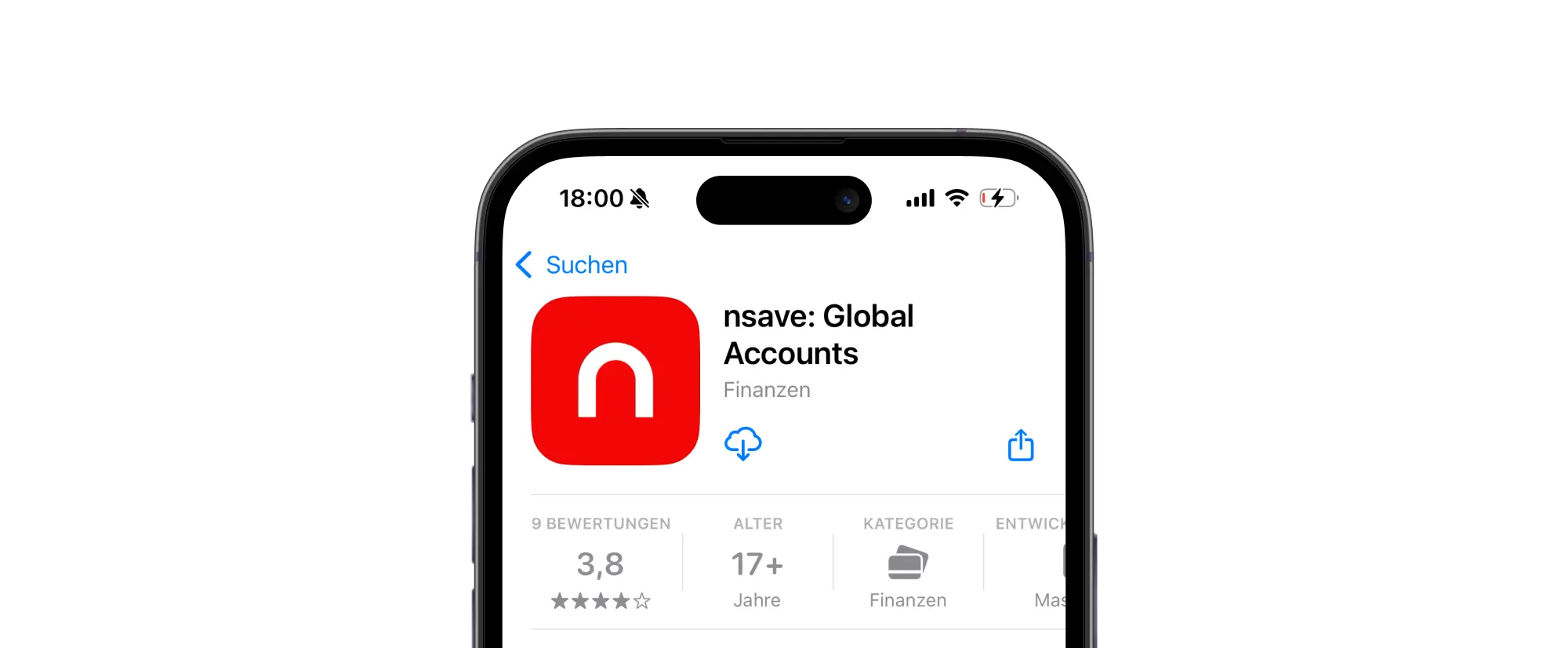
Your nsave account is free on the Standard plan at $0 per month. Download the nsave app and complete identity verification with your passport or national ID, which takes under 10 minutes with no branch visit. Once verified, nsave assigns you a personal ACH routing number and account number for receiving USD.
Step 2: Receive or Fund Your USD Acccount
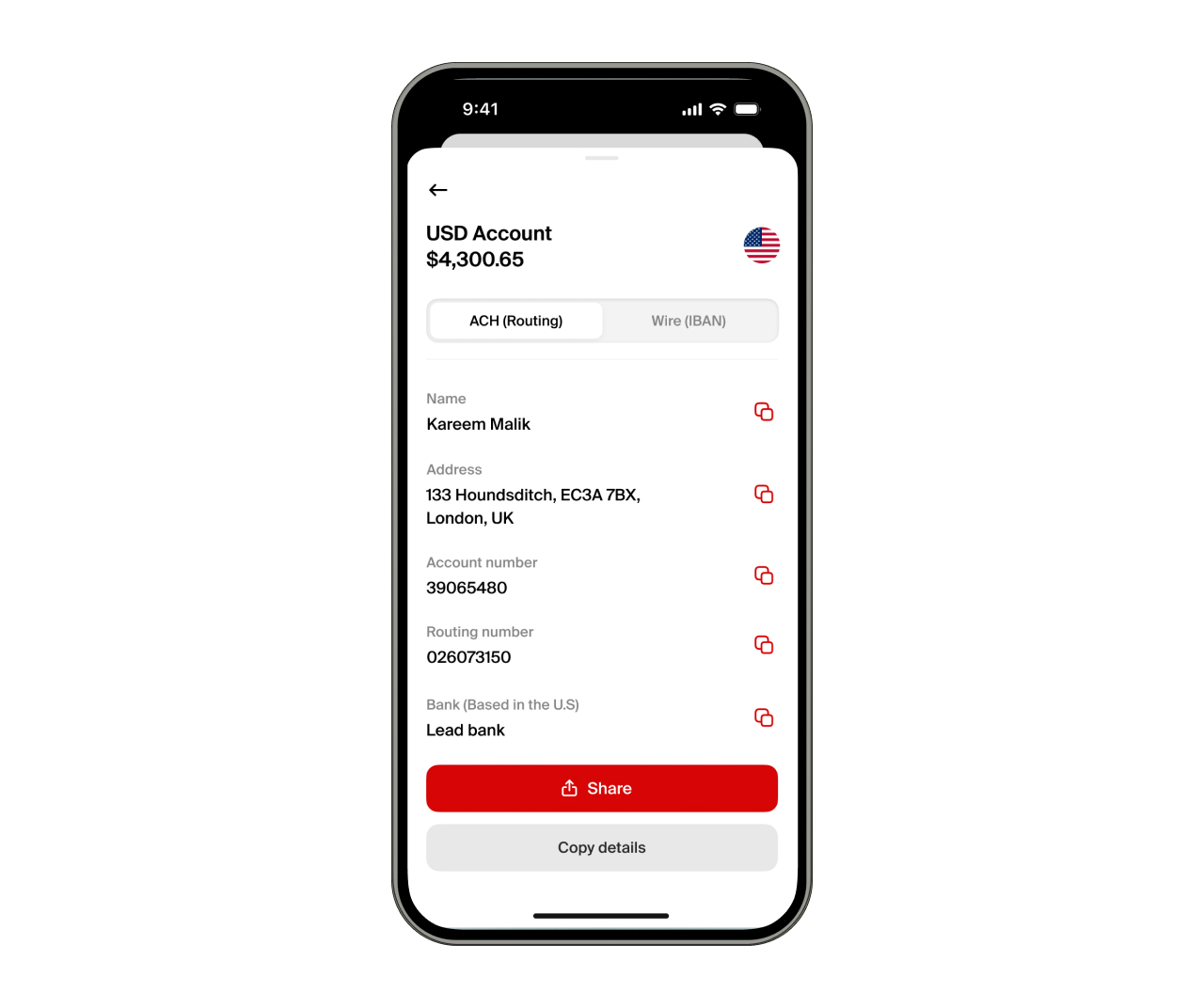
To fund the account, receive your salary or freelance earnings directly in USD. Diaspora Syrians working abroad can receive via ACH or SWIFT for free on both the Standard and Pro plans, and freelancers can set their nsave ACH details as the payout destination on Upwork, Fiverr, Toptal, Freelancer.com, PeoplePerHour, Deel, or any platform that pays to US account details. The USD sits in your account unconverted until you choose to send it.
Step 3: Send to Syria for Cash Pickup
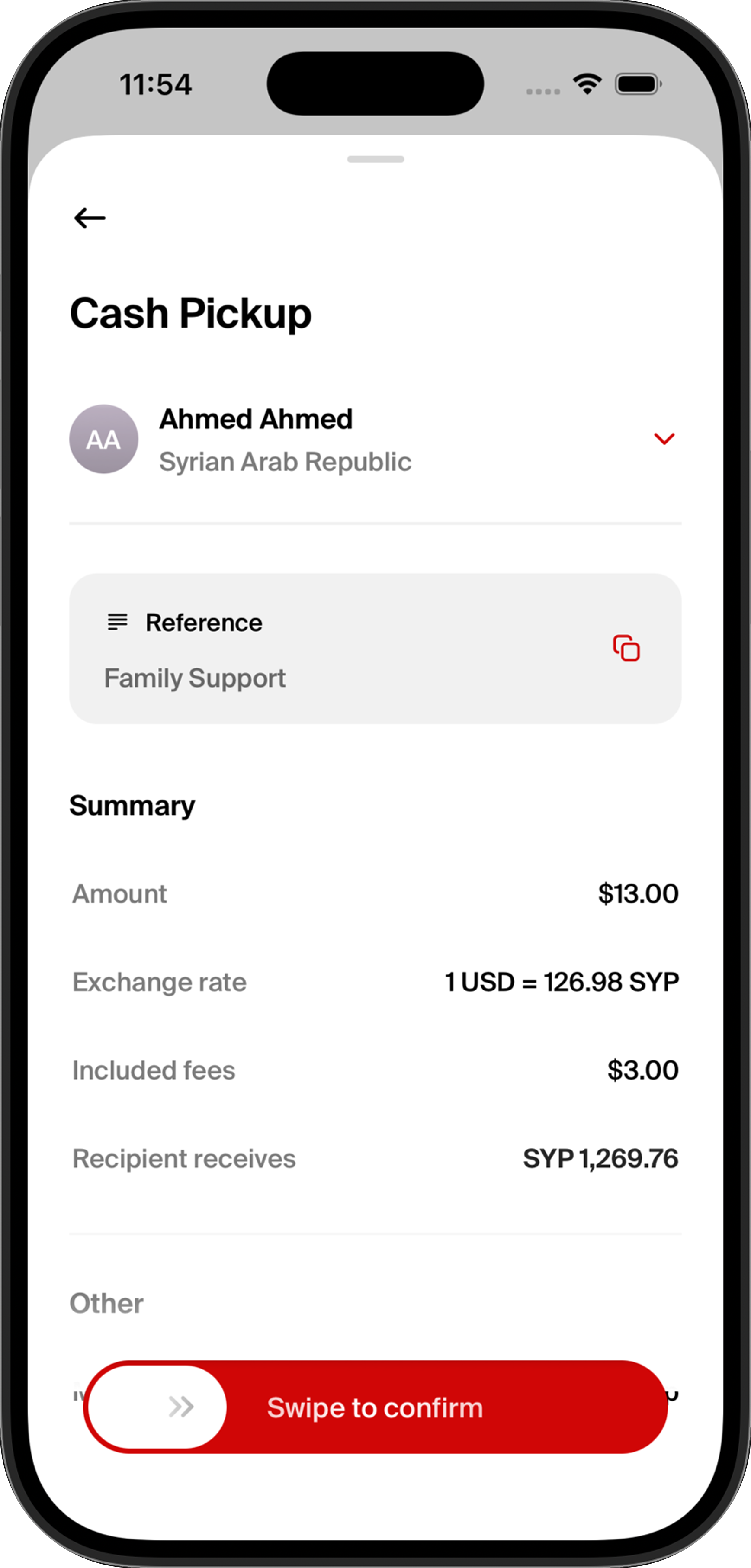
To send to Syria, open a new transfer in the nsave app, select Syrian Arab Republic, and enter the amount. The app shows 4 things before you confirm including:
- The exact amount deducted from your USD balance.
- The live USD to SYP exchange rate.
- The included service fee, which is $3.00 for transfers below $301 as of June 2026, with lower percentage fees on larger amounts. Check current rates in the nsave app, as fees may change.
- The exact SYP amount your recipient collects.
After confirming, you share a 15-digit pickup code with your recipient, who collects the cash in Syrian pounds at a National Islamic Bank Syria branch. Branches operate across major Syrian cities including Damascus, Aleppo, Hama, and Homs, and you can track the transfer until collection on the nsave app. You can follow the detailed guide to send money to syria here.
nsave is not a bank. Funds are not FSCS-protectedCustomer funds are held in regulated, UK and EEA financial institutions, separated from company funds, and protected through safeguarding rules designed for electronic money services.
Key Takeaways
According to Numbeo's June 2026 data on living in Syria, a single person in Syria needs approximately $437.50 per month excluding rent, against an average net salary of $58.75.The March 2026 minimum wage of SYP 1,256,000, approximately $105, still falls far below the SYP 3.20 million household abject poverty line recorded by the World Bank the same month.
Inflation ran at 27.5% year-on-year in April 2026 per the Syrian Center for Policy Research, led by housing, energy, and education, and the World Food Programme's May 2026 data on Syria recorded the Minimum Expenditure Basket 19% higher than a year earlier. Community evidence from 2024 through 2026 is unanimous on the survival mechanism: multiple incomes per household and remittances from abroad, with a comfortable family life benchmarked at $1,000 to $2,000 per month while local households manage on a fraction of that.
For diaspora Syrians and USD earners, nsave provides a USD account with free ACH and SWIFT receiving and transfers to Syria collected as cash in Syrian pounds at National Islamic Bank Syria branches, with the rate and fee shown before every confirmation.
Syria's cost of living in 2026 tells a story of a country rebuilding its economic ground floor while millions of its people, at home and abroad, hold it up together. Every documented figure in this guide, from a $0.63 loaf of bread to a SYP 3.20 million poverty line, is also a measure of what each transferred dollar accomplishes when it arrives intact.
For the Syrian earning abroad or in hard currency at home, that arithmetic carries a quiet weight as the distance between hardship and stability for a family in Damascus or Aleppo is often a single well-managed transfer a month, and that distance is now shorter than it has been in years.
The information in this article is provided for general informational and educational purposes only and does not constitute financial, legal, or tax advice from nsave or any of its affiliates. It is not a substitute for advice from a qualified financial adviser. We make no representations or warranties, whether expressed or implied, that the content is accurate, complete, or up to date.
Fees, exchange rates, incentives, and product availability may change and can vary by user and jurisdiction. Examples are illustrative only. Before making any financial decisions, seek advice from a qualified financial adviser who can assess your individual circumstances and objectives.
nsave helps freelancers and professionals from Bangladesh, Nigeria, Pakistan, Egypt, and other emerging markets receive and manage USD abroad. As a non-bank payment provider, your money is not protected by the Financial Services Compensation Scheme (FSCS). Customer funds are held in regulated, UK and EEA financial institutions, separated from company funds, and protected through safeguarding rules designed for electronic money services.
