

Inflation in Pakistan: CPI Data, History, Current Rate, Causes, and Outlook (2026)

Pakistan's headline inflation hit 10.9% in April 2026, the first double-digit reading in more than a year and well above the government's own 8 to 9% forecast. The jump was driven by transport, housing, utilities, and wholesale prices all accelerating at once. It followed a stretch of sharp easing, because full-year 2025 inflation averaged just 3.53%, down from a five-year average of 14.91% and a peak near 38% in May 2023.
This guide explains what is happening to prices in Pakistan, covering the current rate, how it is measured, the main causes, the impact on households and businesses, the State Bank's response, and the outlook into FY27.
What Is Inflation and How Is It Measured in Pakistan?
Inflation is the rate at which the general price level of goods and services rises over time, meaning the same amount of PKR buys less than it did before. Pakistan tracks it through three official indices, each measuring a different slice of the economy.
Consumer Price Index (CPI)
The CPI is Pakistan's headline measure, published monthly by the Pakistan Bureau of Statistics (PBS) against a 2015/16 base of 100. It is the number news reports mean by Pakistan's "inflation rate", and PBS reports urban and rural CPI separately because the two often diverge. When Pakistani users in 2026 went looking for the official 2025 average of 3.53%, the answer pointed back to the PBS price-statistics portal, the primary source behind every figure here.
Sensitive Price Indicator (SPI)
The SPI tracks the price of 51 essential commodities weekly, giving a faster signal of pressure on low-income households than the monthly CPI. When the SPI climbs faster than the CPI, the cost of basic necessities is outpacing general inflation, which hits the poorest families hardest. In April 2026 the SPI rose 10.1% year-on-year.
Wholesale Price Index (WPI)
The WPI measures prices at the producer and wholesale level, before goods reach the shelf, which makes it a leading indicator. When the WPI rises sharply, the CPI usually follows within weeks as businesses pass higher input costs to buyers.
In April 2026 the WPI surged to 13.6% year-on-year, more than double March's 6.7%, signalling further price rises ahead.
Types of Inflation in Pakistan
Four types explain most of what drives prices, set out here in plain terms:
- Demand-pull: Too much money chasing too few goods.
- Cost-push: Higher production costs passed on to consumers, the main driver in Pakistan currently.
- Imported inflation: Price rises that originate abroad and enter through import costs.
- Monetary inflation: An excess money supply eroding purchasing power.
Cost-push and imported inflation are doing most of the work in 2026, which the next section quantifies.
Pakistan's Current Inflation Rate (2026)
Pakistan's headline inflation returned to double digits in April 2026 at 10.9% year-on-year, the highest reading since mid-2024 and far above official forecasts. Here is the full picture: the headline number, the sub-indices, the trend, and recent history.
April 2026 Inflation Data
April 2026 CPI came in at 10.9% year-on-year, up from 7.3% in March and just 0.3% in April 2025. The month-on-month rise was 2.5%, up from 1.2% in March. The supporting readings break down as follows:
- Urban CPI: 11.1% year-on-year.
- Rural CPI: 10.6% year-on-year.
- Core inflation, non-food and non-energy: 8.0% urban and 8.5% rural.
- SPI: 10.1% year-on-year.
- WPI: 13.6% year-on-year.
The reading overshot the Ministry of Finance's own 8 to 9% forecast, which means the April acceleration caught even government economists off guard.
According to a 2026 Pakistan Bureau of Statistics press release on March CPI, national CPI had climbed 7.30% in March, with urban at 7.39% and rural at 7.17%.
Monthly Inflation Trend in FY2025–26
Inflation began FY26 inside the State Bank's 5 to 7% target band before breaking out. January 2026 came in at 5.8%, February at 7.0%, and March at 7.3%, the first breach of the upper bound since October 2024. Then April jumped to 10.9%. The 10-month FY26 average stands at 6.19%, though the April spike will push the full-year figure higher.
According to a 2026 Business Recorder report on SBP inflation projections, the State Bank had earlier expected inflation to stay within target for FY26, which the April data overturned.
Historical Inflation in Pakistan
April's 10.9% looks alarming next to 2025 but modest next to 2023, and the five-year record shows why. The annual averages tell the story:
| Year | Annual Average CPI |
|---|---|
| 2021 | ~9.5% |
| 2022 | ~19.9% |
| 2023 | 37.97% all-time high, May |
| 2024 | 12.65% |
| 2025 | 3.53% nine-year low |
The five-year average sits at 14.91%, against a long-run average of 8.36% since 1957. Discussions within Pakistani personal-finance communities in early 2026 shared the same Statista series and kept returning to one point, that the 2022 to 2023 spike permanently reset price levels even as the rate later fell.
That distinction between the rate and the level is what the rest of this guide unpacks.
Main Causes of Pakistan's Inflation in 2026
Pakistan's April 2026 spike reflects several global and domestic pressures arriving together, not a single cause. The main drivers are energy, global oil, currency weakness, food, and the conditions attached to the IMF programme.
Energy Price Increases
Energy is the single largest driver of the April 2026 spike. Transport inflation hit 12.5% year-on-year in March 2026, up from 0.4% the month before, while housing and utilities rose 11.5%. Pakistan imports most of its fuel, so petrol, diesel, LPG, and electricity tariff changes feed into the CPI within weeks.
The power sector's circular debt, the stack of unpaid obligations across generation and distribution, keeps pushing electricity costs higher regardless of global oil prices, which makes energy a structural pressure rather than a passing shock.
Global Oil Prices and Middle East Tensions
Escalating conflict risk around the Strait of Hormuz in early 2026 drove international oil prices up, feeding straight into Pakistan's transport and production costs because it imports most of its energy.
According to a 2026 currencythoughts report on the SBP rate decision, the State Bank cited volatile oil prices tied to Middle East tensions as a key reason for raising the policy rate in April 2026. A prolonged energy shock also strains the PKR and the import bill, which leads to the next cause.
Currency Depreciation and PKR Weakness
When the PKR weakens against the USD, every imported good costs more in rupee terms, from crude oil to wheat to machinery. Pakistan's import-heavy economy means depreciation feeds straight into the CPI through imported inflation.
Three factors set the exchange-rate path
1. Foreign reserve levels
2. IMF programme requirements on the rate.
3. Dollar demand from importers.
When reserves are thin, the PKR has less defence, which is why currency stability and inflation tend to move together in Pakistan.
Food Prices
Food inflation eased through 2025, a major reason the full-year average fell to 3.53%, but it stays volatile, running at 5.82% year-on-year in February 2026. The categories that move Pakistan's food CPI most are wheat and flour, cooking oil, pulses, vegetables, and sugar, with wheat carrying the heaviest weight because it feeds the whole food chain as an input cost.
Food inflation hits low-income households hardest, since food takes a larger share of their spending, which is the same group the SPI is built to track.
IMF Programme Conditions
Pakistan's IMF stabilisation programme requires the government to cut subsidies, broaden the tax base, and move utility tariffs toward cost recovery.
Each condition is inflationary in the short term, listed here because the mechanisms differ:
- Removing electricity subsidies raises household bills directly.
- Broader taxation lifts production costs that businesses pass on.
- Tighter fiscal deficits remove spending that once cushioned consumers.
This is an intentional trade, because the same programme that is stabilising the economy is also keeping prices elevated, which is why relief has felt slow even as the headline rate fell in 2025.
How Inflation Affects Pakistanis in 2026
Inflation statistics describe an average, but the lived experience is uneven, hitting low-income households, salaried workers, and small businesses harder than the headline suggests.
Impact on Households and the Cost of Living
For ordinary households, inflation means the grocery bill, the electricity bill, and the fuel tank all rising at once. When food and energy, the two largest spending categories for most Pakistani families, accelerate together as they did in April 2026, the rate a low-income family actually feels runs well above the headline CPI.
The pressure lands hardest on the poorest decile and on urban renters facing rising rent and utility bills at once. Discussions in Pakistani community forums as far back as 2024 put real figures on this, with one commenter pricing a dozen eggs at 400 PKR and a loaf at 250 PKR against an average salary near 30,000 PKR, which shows how quickly essentials swallow a month's income.
Impact on Salaried Workers
Most salaried workers receive annual increments, and when those increments fall below inflation, real wages decline. At 10.9% CPI and a five-year average of 14.91%, many salaried Pakistanis have lost ground in real terms for years, with fixed-income public sector workers the most exposed because their pay adjusts slowly while costs do not wait. That widening gap between income and prices is what turns a statistic into a monthly budget problem.
Impact on Small Businesses and SMEs
Inflation raises the cost of inputs, raw materials, energy, labour, and borrowing, while competition often limits how much a business can pass on. For Pakistan's SMEs, which run on thin margins and limited access to formal finance, sustained inflation compresses profitability. The April 2026 hike to 11.5% also raises borrowing costs directly, which slows the very firms that create jobs.
Impact on Savings
Inflation erodes the real value of money held in low-yield accounts. If a PKR account pays 7 to 8% a year while inflation runs at 10.9%, the holder loses purchasing power every month.
Some professionals who earn in dollars hold part of their money in foreign currency accounts such as a GBP and EUR Accounts, and others hold gold as a store of value during inflationary periods. Holding PKR in a standard account through double-digit inflation is, in real terms, a slow loss rather than a safe default.
The State Bank of Pakistan's Response to Inflation
The State Bank's main tool against inflation is the policy rate, the benchmark interest rate that sets borrowing costs across the economy. On 27 April 2026 the State Bank raised it by 100 basis points to 11.5%, its first hike since June 2023, responding to April's double-digit reading and rising energy risks.
The Policy Rate and How It Works
When the State Bank raises the policy rate, borrowing becomes more expensive for banks, businesses, and consumers, which cools spending and investment and pushes down on prices. The April hike reversed a long easing cycle, because the rate had been cut from a June 2023 peak of 22% to 10.5% by early 2026, a cumulative 1,150 basis point reduction.
According to a 2026 State Bank of Pakistan Monetary Policy Report on the inflation outlook, the medium-term target band remains 5 to 7%, though the Bank has signalled inflation is likely to sit above that band for most of FY27.
What the SBP's Rate Hike Means for Pakistanis
The rate hike reaches Pakistanis in three direct ways, listed here because each affects a different decision:
- Home and vehicle financing becomes more expensive.
- Business borrowing costs rise, which can slow hiring and investment.
- Deposit rates on accounts typically adjust upward, so balances may earn more than they did at 10.5%.
The tension is real, because higher rates fight inflation while also slowing growth, and the State Bank is accepting weaker activity to bring inflation back toward target.
For households, that means the cost of credit and the reward for holding cash are both moving at once.
Pakistan Inflation Compared to the Region
At 10.9% in April 2026, Pakistan's inflation runs higher than most of its neighbours, though regional readings shift month to month. India has generally tracked in low single digits through early 2026, Bangladesh has sat closer to high single digits, and Turkey is still easing down from a crisis that peaked above 80% in 2022. Pakistan's path, from near 40% in 2023 to single digits in 2025 and back up in 2026, reflects a volatile recovery rather than settled stability.
Inflation Outlook for Pakistan (2026–2027)
The State Bank's April 2026 hike came with a warning that inflation is likely to stay above the 5 to 7% target band for most of FY27. The sections below cover the official projections, the main risks, and what would bring inflation back under control.
Official Projections
Official guidance points to elevated inflation through FY27 before it eases. According to a 2026 Business Recorder report on the IMF Pakistan outlook, the IMF projected in May 2026 that consumer inflation would likely exceed 10% through the final quarter of the 2026 fiscal year.
The Ministry of Finance's earlier 8 to 9% projection was already overtaken by the April data, and the State Bank has flagged that the current supply shock could push inflation further before it cools.
Five Key Risks That Could Keep Inflation Elevated
Five risks dominate the forecasts, each with a direct route into prices:
- A sustained rise in global oil prices from Middle East conflict risk, which lifts transport and production costs.
- Further PKR depreciation, which raises the rupee cost of all imports.
- Unanticipated electricity and gas tariff adjustments, which feed straight into the CPI.
- A sharper-than-expected pickup in domestic demand, which pulls prices up from the demand side.
- Any disruption to the IMF programme, which would unsettle reserves and fiscal policy.
What Would Bring Inflation Back to Target
The reverse conditions would pull inflation back toward the 5 to 7% band: oil prices stabilising or falling, a steady PKR backed by adequate reserves, the IMF programme staying on track, subdued food prices, and a policy rate held tight long enough to anchor expectations. Together they form the checklist worth tracking through FY27.
How Inflation Affects Freelancers and Remote Workers in Pakistan
For Pakistani freelancers and remote workers who earn in USD, inflation works differently than for salaried PKR earners: their dollar income may hold steady while every local cost, rent, food, utilities, and transport, keeps rising in PKR.
The PKR Cost-of-Living Problem
A freelancer earning $1,000 a month receives a stable dollar income, but the PKR cost of daily life rises with every inflation tick. When the PKR also depreciates, as it has repeatedly during inflationary periods, that same $1,000 converts to more rupees, which partly offsets the inflation hit.
Earning in USD is therefore a partial natural hedge against PKR inflation, but only when the conversion timing works in the earner's favour rather than converting everything the moment it lands. The community knows this pressure well, because Pakistani freelancers writing in 2026 describe working longer hours just to hold the same standard of living as bills climb.
The Case for Holding USD
When PKR inflation runs at 10.9% and local accounts may not keep pace, some freelancers hold part of their income in USD as a steadier store of value rather than converting everything at once. The reasoning is documented in Pakistani investing communities through 2026, where one widely shared post stressed judging gains in real terms, after inflation, rather than by the headline number, and a commenter noted that with inflation near 14 to 15% against a policy rate of 11.5%, real returns on rupee cash were negative.
For freelancers, the inflation question becomes a payout question: when to convert, at what rate, and where the USD sits until then. An account that lets USD earnings sit and convert on the earner's own schedule gives more control than withdrawing to PKR at each payment.
For salaried PKR earners, inflation is largely something that happens to them. For freelancers earning in USD, it is something they can partly manage, by choosing where their dollars sit and when they convert. The options below cover how Pakistani professionals who earn in USD can hold, convert, and use those earnings.
How to Reduce the Impact of Inflation in Pakistan
No single tactic removes inflation's bite, but a combination of practical habits reduces how much purchasing power is lost. The most common approaches among Pakistani households and professionals are described below as observations, not instructions:
- Track essential spending, so a spike in food, utility, or transport costs gets caught early rather than going unnoticed.
- Reduce high-cost debt, because at an 11.5% policy rate, consumer loan and card rates are elevated and compound the loss during inflation.
- Hold an emergency buffer of three to six months of expenses in an account that earns a meaningful rate, lowering the real cost of staying liquid.
- Hold or earn in USD where possible, which gives freelancers a partial hedge against PKR inflation and depreciation.
- Consider assets that have historically outpaced inflation, such as US equities or gold, since cash losing value at 10.9% a year is a real loss. Investing carries risk, and this is general context, not advice.
- Build more than one income stream, a pattern visible in Pakistan's freelancing sector, which earned $959 million in the first 10 months of FY26.
Each reduces exposure differently, which is why people rarely lean on just one.
How to Hold and Convert USD Earnings with nsave
To hold and convert USD earnings without converting at the moment of payment, nsave gives Pakistani freelancers and remote workers a USD account with their own ACH routing number and account number.
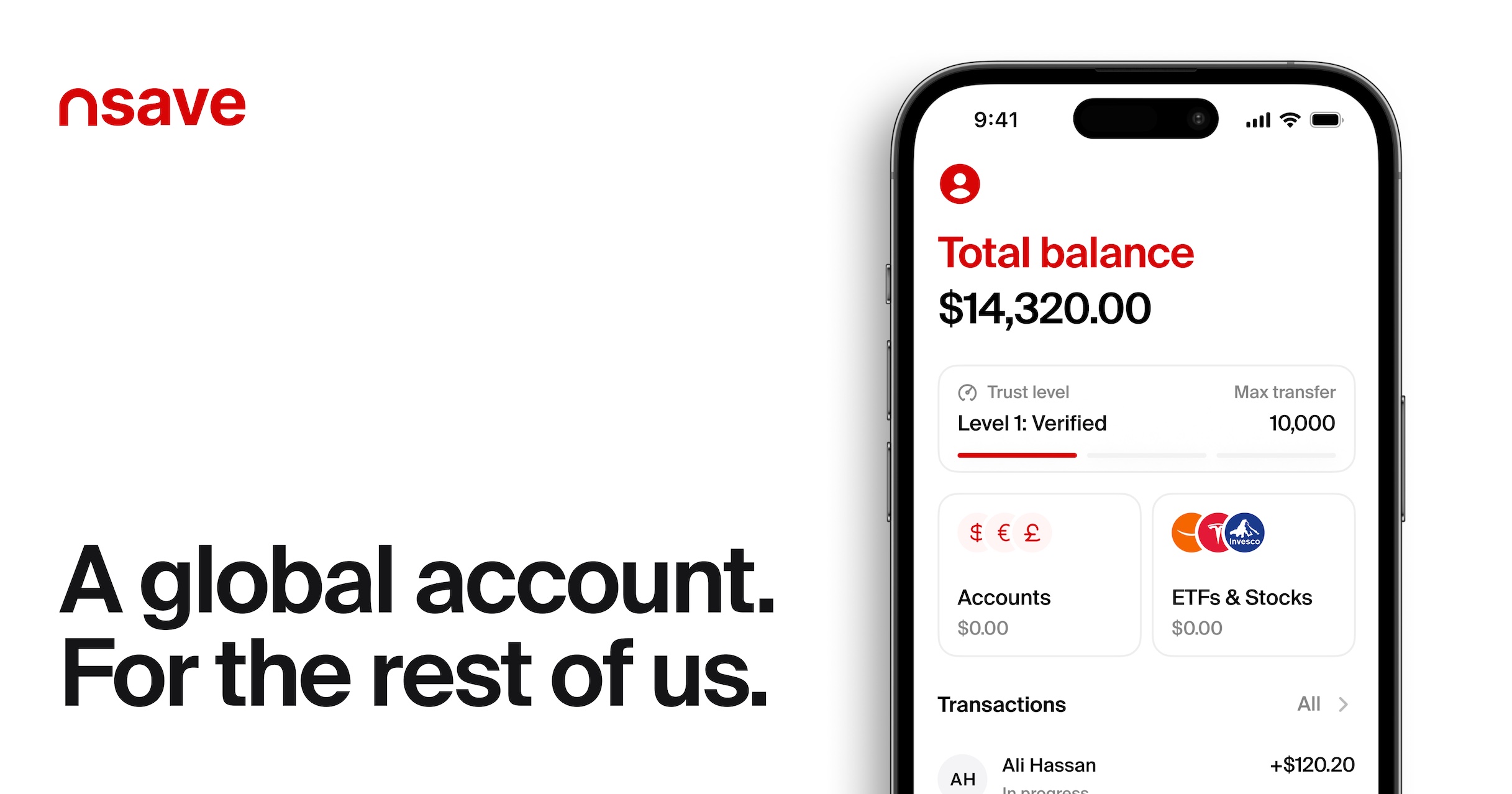
International platforms including Upwork, Fiverr, and Deel, along with direct US-based clients, can send earnings into the account without conversion at the point of payment.
The features that matter in an inflation context are these:
- Earnings arrive in USD and can sit untouched until the holder converts to PKR, at a time and rate of their choosing, with a minimum payout fee of $1.
- Idle USD is able to earn 3.2% annual rewards on the Standard plan, which costs $0 a month, paid daily. (This rate is subject to change)
- The same balance can be placed into 500+ US stocks, ETFs, bonds, or gold indices from $1 with no order fees, which some holders use as a further hedge against PKR erosion.
To open a nsave USD account, download the nsave app, verify your identity using your passport or national ID, and complete onboarding in under 10 minutes, no branch visit, no minimum deposit required.
The Standard plan is free. Once verified, nsave issues a personal US ACH routing number and account number. This is what makes free Upwork ACH withdrawal possible from Bangladesh.
New to nsave? Watch how to set up your account in under 10 minutes
nsave is not a bank, and funds are not protected by the Financial Services Compensation Scheme. Funds held in nsave are protected through regulatory safeguarding and segregated accounts. Investments involve risks, including the potential loss of capital. Past performance is not indicative of future results.
What Rising Prices Mean for the Year Ahead
Pakistan has now lived through a near-40% inflation peak, a nine-year low, and a fresh climb back to double digits, all inside three years. That volatility is exhausting, but it has also made a generation of Pakistani earners far more fluent in real returns, currency timing, and where their money sits than they were a decade ago.
For freelancers earning in dollars, that fluency is quietly powerful. Knowing how inflation, the rupee, and your payout timing interact turns a number on the news into something you can actually weigh and plan around.
Frequently Asked Questions
What is Pakistan's current inflation rate?
Pakistan's inflation was 10.9% year-on-year as of April 2026, measured by the Consumer Price Index published by the Pakistan Bureau of Statistics.
Why did inflation spike in April 2026?
The spike came from a sharp rise in transport, housing, and utility costs alongside higher wholesale prices, compounded by rising global oil prices and a low base from April 2025 when inflation was just 0.3%.
What is the SBP policy rate right now?
The State Bank policy rate is 11.5%, following a 100 basis point hike on 27 April 2026, its first increase since June 2023.
Was Pakistan's inflation always this high?
No. It peaked near 38% in May 2023, fell to a full-year average of 3.53% in 2025, then rose again in early 2026.
How does inflation affect my savings?
If your account earns less than the 10.9% inflation rate, your money loses real purchasing power every month.
What is the difference between CPI, SPI, and WPI?
CPI measures general consumer prices monthly, SPI tracks 51 essential commodities weekly as a faster signal for low-income households, and WPI measures wholesale prices as a leading indicator of where consumer prices are heading.
Does earning in USD protect against Pakistani inflation?
Partly. USD income is not directly affected by PKR inflation, but the local cost of living still rises in PKR, so the timing of conversion is what determines how much protection it provides.
Investments involve risks, including the potential loss of capital. Past performance is not indicative of future results. Data provided is for illustrative purposes only. Consult a licensed financial adviser before making any investment decisions. Investment accounts are provided by a third-party broker dealer.
The information in this article is provided for general informational and educational purposes only and does not constitute financial, legal, or tax advice from nsave or any of its affiliates. It is not a substitute for advice from a qualified financial adviser. We make no representations or warranties, whether expressed or implied, that the content is accurate, complete, or up to date.
Fees, exchange rates, incentives, and product availability may change and can vary by user and jurisdiction. Examples are illustrative only. Before making any financial decisions, seek advice from a qualified financial adviser who can assess your individual circumstances and objectives.
nsave helps freelancers and professionals from Bangladesh, Nigeria, Pakistan, Egypt, and other emerging markets receive and manage USD abroad. As a non-bank payment provider, your money is not protected by the Financial Services Compensation Scheme (FSCS). Customer funds are held in regulated, UK and EEA financial institutions, separated from company funds, and protected through safeguarding rules designed for electronic money services.
