
Credit Cards in Pakistan: Best Cards, Fees and How to Apply

A credit card gives you a revolving credit line from an SBP-regulated bank, so you spend up to your limit, get a monthly statement, and either pay in full with no markup or carry a balance charged at 24% to 45% per annum.
Three mechanics decide whether it helps or hurts you:
- Credit limit: The borrowing cap, set from your income, usually 2 to 3 times your net monthly salary.
- Billing cycle: A monthly statement showing every transaction and the total due by a fixed date.
- Minimum payment: The smallest amount that avoids a late fee, typically 5% to 10% of the balance.
Paying only the minimum while carrying a balance triggers markup on the rest at the card's annual rate, which is how small balances quietly grow into large ones.
Credit Card vs Debit Card
A credit card spends the bank's money while a debit card spends your own, and that single difference shapes rewards and risk alike.The gap matters most at 45% per annum, because a debit card cannot put you in debt while a credit card can.
| Feature | Credit card | Debit card |
|---|---|---|
| Uses borrowed funds | Yes | No |
| Markup charged | Yes, if carried | No |
| Instalment plans | Yes | Limited |
| Cashback or points | Yes | Limited |
| Builds credit history | Yes | No |
| Risk of debt | Yes | No |
Best Credit Cards in Pakistan in 2026
Pakistan's strongest cards in 2026 range from entry-level options to premium travel cards. Fees and rates below come from current bank disclosures and change without notice, so confirm every figure against the live Schedule of Charges before applying.
HBL offers the most versatile premium range. The Platinum is the best all-round pick, with 2% uncapped cashback on dining and travel, lounge access, and travel insurance.
Two conditions catch people out: HBL FuelSaver charges an unconditional monthly fee with no waiver, and fee waivers on other cards need an active Direct Debit Instruction.
Standard Chartered leads rewards and online shopping. Its Titanium card gives up to 5% cashback on online purchases including international platforms, which suits people who spend on subscriptions, Daraz, and overseas sites. The World card targets high earners with a concierge and Emirates discounts, and Saadiq covers Shariah-compliant options.
According to the 2025–2026 Standard Chartered Pakistan disclosures on card eligibility, most of its range now sets a minimum income near PKR 40,000 per month.
Some Pakistani users also reported in 2025 that its card works reliably abroad and its support line accepts calls without a Pakistani number.
Bank Alfalah is the strongest cashback choice. Its Cashback Card returns a flat 1.5% on everything with no bonus categories to track, the Visa Signature adds mid-range travel benefits, and the American Express Gold adds medical and legal cover abroad.
UBL Signature Visa suits frequent international spenders, earning 3 times the points on every international transaction.
Meezan Bank dominates the Islamic segment. The Visa Platinum is the strongest riba-free card, built on a Tawarruq model, Shariah Board certified, with lounge access, fuel discounts, and more than 700 merchant partners. Every Meezan card replaces markup with a fixed monthly service fee.
A few others widen the entry point:
- Allied Bank Visa Gold: accessible income with a wide branch network, a strong first card.
- Askari Bank: the lowest income threshold of any major issuer.
- BankIslami Platinum: the runner-up Islamic card where Meezan coverage is thin.
That spread means almost any salaried Pakistani can find a starter card to build history on.
Best Cards by Category
If you already know what you need, the picks below rank by the single benefit each category prioritises.
For cashback, the Bank Alfalah Cashback Card wins with a flat 1.5% and no tracking.
For rewards, the Standard Chartered Titanium leads with up to 5% online, with one caveat: at 36% to 45% markup, carrying any balance wipes out every rupee of reward, so it only works if you pay in full each month.
For travel, the HBL Platinum suits most people, with the Standard Chartered World for high earners.
For Islamic banking, the Meezan Visa Platinum is the strongest, with BankIslami Platinum as runner-up.
For a first card, Allied Bank and Askari Bank offer the most accessible thresholds. Match the card to how you actually spend rather than the highest headline benefit.
Credit Card Fees and Charges in Pakistan
The same card can be a useful tool or an expensive liability depending entirely on its fees, so understand each charge before you apply.
Annual fees range from PKR 0 to PKR 3,000 on entry-level cards up to PKR 40,000 or more on premium ones, and most banks reverse the fee on enough spending. According to the 2026 Bank of Punjab fee disclosure on premium cards, one gold structure reverses the annual fee when you spend PKR 40,000 within 60 days. The clear exception is HBL FuelSaver, which has no waiver at all.
The markup rate is the fee that matters most. Conventional cards charge 24% to 45% per annum on any balance not cleared by the due date, up to roughly 3.5% per month. The 2026 Bank of Punjab disclosure on premium card pricing sets a retail APR near 42%.
According to the 2026 State Bank of Pakistan monetary policy statement, the policy rate rose 100 basis points to 11.50% in April 2026, which feeds straight into card rates.
The cost is concrete: carry PKR 100,000 unpaid for a year at 42% and you owe about PKR 42,000 in markup before any new spending, which erases the rewards you earned. Islamic cards avoid this entirely through a fixed monthly service fee.
Three other charges deserve attention:
- Late payment fee: a flat amount or a percentage of the balance, plus a mark at the SBP's Credit Information Bureau that affects future applications.
- Cash advance fee: roughly 3% to 4% at an ATM, with markup starting immediately and no grace period.
- Foreign transaction fee: roughly 3% to 4% on any purchase in a foreign currency, on top of the network rate, covering Netflix, Amazon, Spotify, and every USD-billed platform.
For anyone with regular international spending, that foreign transaction fee is the cost that compounds across every purchase, and it is the one a USD card can remove.
Credit Card Eligibility and How to Apply in Pakistan
Most Pakistani banks require a minimum monthly income, a valid CNIC, and an existing banking relationship before approving a card. Income thresholds rise steeply with tier, and minimum age is usually 21 for salaried applicants and 25 for self-employed applicants at some banks.
A salaried applicant typically needs a CNIC, the last 3 months of salary slips, the last 6 months of bank statements, an employment letter, and a utility bill.
Self-employed applicants usually add NTN and tax-return documents. Banks then check the SBP's Credit Information Bureau, which records every loan, card, and repayment, so missed payments or high existing debt reduce approval chances. First-time applicants are judged on income stability and banking tenure instead.
To apply, submit your documents through the bank's website or app, since HBL, Bank Alfalah, UBL, Meezan, MCB, and Standard Chartered all support digital applications, and approval usually takes 7 to 15 working days.
You can raise your odds in 4 ways:
- Keep 6 months of salary credits flowing into the bank where you apply.
- Keep existing loan obligations low against your income, since banks assess debt-to-income ratio.
- File tax returns annually, because mid-tier and premium cards increasingly ask for NTN documentation.
- Avoid applying for several cards at once, as each application triggers a visible CIB inquiry.
Building that record early is what turns a first card into easy approvals later.
Secured Cards for Self-Employed and Freelancers
If you cannot provide salary slips, a secured credit card is the most reliable route, because you place a fixed deposit and receive a card with a limit set at 80% to 90% of it. No income proof is required, and the deposit keeps earning while it secures the line. This matters in Pakistan, where many freelancers earn irregular or USD-denominated income that standard documentation does not capture.
According to the r/PakistaniTech community, one freelancer summed up the wider frustration in 2024 with the line, "Sucks how much we lose to fees." A secured card solves the documentation problem, and a USD account, covered below, solves the currency one.
Islamic Credit Cards in Pakistan
Islamic credit cards work like conventional ones, with a credit line, a monthly statement, and merchant acceptance, but without charging markup, or riba, on balances.
Pakistani Islamic cards use two main structures. The Tawarruq model, used by the Meezan Visa Platinum, runs a commodity transaction so the bank earns a fixed monthly service fee rather than interest. Murabaha and Musharaka structures appear across other products, and every Islamic card must be certified by the issuing bank's Shariah Supervisory Board.
The Meezan Visa Platinum is the strongest riba-free card in 2026, while BankIslami Platinum is the runner-up where Meezan coverage is thin.
According to the 2026 Meezan Bank announcement on retail card expansion, the bank plans a nationwide credit card rollout by 2027, which signals stronger competition ahead for riba-free cardholders.
Credit Card Instalment Plans in Pakistan
Instalment plans let you spread a large purchase across 3 to 36 months on your existing limit, without a separate loan. Several banks offer 0% markup plans, usually merchant-funded, on electronics, mobile phones, appliances, and airline tickets.
Three rules catch people out: missing a payment can convert the remaining balance back to the full markup rate, early repayment may carry a prepayment penalty, and the full amount is deducted from your available limit immediately rather than spread over time. Read the terms before a big purchase, because the convenience disappears the moment one payment slips.
Using Your Credit Card for Online and International Payments
Pakistani Visa and Mastercard cards are accepted on most international platforms, including Netflix, Amazon, Spotify, Figma, Google Ads, and airline sites. A few points decide the cost. A foreign transaction fee of 3% to 4% applies to every non-PKR purchase on top of the network rate, many cards need a one-time international activation, OTP authentication kicks in above a bank-set threshold, and the SBP caps annual foreign-currency card spending per cardholder, so confirm the current limit with your bank.
For Pakistanis paying several USD-billed subscriptions every month, that 3% to 4% fee on each charge is a recurring, avoidable cost, and the community has noticed.
According to the r/pakistan community, one widely shared recommendation in 2025 advised, "Go with an international card to save yourself from the exorbitant taxes on intl use that come with a local card," naming options such as nsave.
A local Pakistani card adds tax and FX cost to every international purchase, and local USD cards carry their own friction. Another user reported in 2025 that an HBL foreign-currency debit card "won't work on ATMs within Pakistan." With nsave, you spend from a USD balance and remove the foreign transaction fee on USD-billed purchases entirely.
How to Make International Payments with nsave
To pay internationally without a foreign transaction fee on USD purchases, fund an nsave USD account and spend with its virtual USD Mastercard, which charges 0% on USD-billed payments and a 1.5% FX fee only when you spend in another currency.
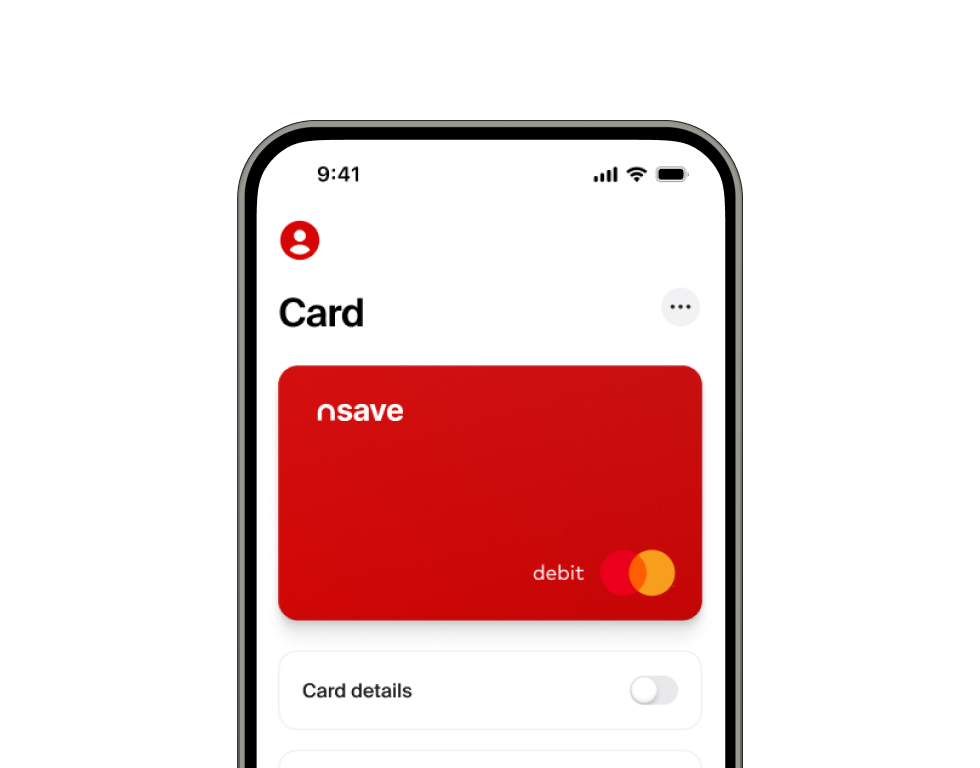
This is built for Pakistanis paying international subscriptions, freelance tools, and platforms, or spending abroad in USD. You open an account in under 10 minutes with a passport or CNIC, fund it by ACH, SWIFT, or stablecoin deposit, then activate the card in the app, which supports Google Pay, with Apple Pay coming soon.
The community already uses it this way. According to the r/PakistaniTech community, one user in 2025 described the setup plainly: "Try using nsave, you get USD account details as well a card."
Beyond card spending, an idle USD balance earns a 3.2% annual reward on the $0 per month Standard plan, paid daily, and any balance can be invested in US stocks, ETFs, bonds, or gold indices from $1 with zero order fees.
| Feature | Pakistani credit card | nsave virtual Mastercard |
|---|---|---|
| Foreign transaction fee | 3% – 4% | None(USD),0.5%-1.5% Other Currencies |
| Markup on balance | 24% – 45% p.a. | None |
| Monthly fee | Varies | $0 |
| Rewards on balance | None | 3.2% p.a., daily |
| Investing built in | No | Stocks, ETFs, gold |
| Credit check required | Yes | No |
For Pakistanis who clear their balance and spend mostly in USD, the nsave card removes the foreign transaction fee that makes USD spending on a conventional card expensive, and the $0 Standard plan means holding both costs nothing.
Credit Card Security in Pakistan
Cards from SBP-regulated banks are safe when used correctly, and four built-in tools protect you:
- OTP: Required for online transactions and sent to your registered number, so never share it, because no bank will ask for it.
- EMV chip and PIN: Far safer than the magnetic stripe for in-person use.
- SMS alerts: Enable them at activation so any unauthorised charge shows within seconds.
- Card freeze: Lock and unlock the card instantly in the app.
Beyond the tools, watch for phishing messages imitating your bank, ATM skimming devices, and checkout pages without the HTTPS padlock. Reviewing your statement every month is the habit that catches most fraud early.
Frequently Asked Questions
Which bank has the best credit card in Pakistan?
For overall versatility, HBL Platinum. For rewards and online shopping, Standard Chartered Titanium. For Islamic banking, Meezan Visa Platinum. For beginners, Allied Bank Visa Gold.
What is the interest rate on credit cards in Pakistan?
Conventional markup runs from 24% to 45% per annum, up to about 3.5% per month on any balance you carry.
Can freelancers get a credit card in Pakistan?
Yes, through a secured card backed by a fixed deposit, with no income proof required and a limit set at 80% to 90% of the deposit.
Are Islamic credit cards halal?
Yes, when certified by the bank's Shariah Supervisory Board, as with Meezan and BankIslami cards, which are fully riba-free.
Which credit card gives airport lounge access in Pakistan?
HBL Platinum, Standard Chartered World, Meezan Visa Platinum, and Bank Alfalah Signature all include lounge access.
Is a rewards credit card worth it in Pakistan?
Only if you pay your full balance every month, because at 36% to 45% markup, carrying any balance instantly cancels all reward value.
What a Card Makes Possible
Choosing a credit card in Pakistan in 2026 is no longer a narrow decision between two or three banks.
It is a choice across cashback, rewards, travel, and fully riba-free options, with secured cards opening the door for freelancers whose income never fit a salary slip.
The harder problem for anyone earning or spending in USD was always the cost of touching dollars from inside the country.
A USD account and card from nsave now sit alongside the conventional system, so a freelancer in Lahore or a remote worker in Karachi can hold earnings in USD and spend them online without losing a slice to fees on every transaction.
The nsave GBP and EUR card accounts are issued by a partner institution pursuant to a licence by Mastercard International. The partner institution is authorised by the Financial Conduct Authority under the Electronic Money Regulations 2011 for the issuing of electronic money and payment instruments. Mastercard and the Mastercard brand mark are registered trademarks of Mastercard International.
Investments involve risks, including the potential loss of capital. Past performance is not indicative of future results. Data provided is for illustrative purposes only. Consult a licensed financial adviser before making any investment decisions. Investment accounts are provided by a third-party broker dealer.
The information in this article is provided for general informational and educational purposes only and does not constitute financial, legal, or tax advice from nsave or any of its affiliates. It is not a substitute for advice from a qualified financial adviser. We make no representations or warranties, whether expressed or implied, that the content is accurate, complete, or up to date.
Fees, exchange rates, incentives, and product availability may change and can vary by user and jurisdiction. Examples are illustrative only. Before making any financial decisions, seek advice from a qualified financial adviser who can assess your individual circumstances and objectives.
nsave helps freelancers and professionals from Bangladesh, Nigeria, Pakistan, Egypt, and other emerging markets receive and manage USD abroad. As a non-bank payment provider, your money is not protected by the Financial Services Compensation Scheme (FSCS). Customer funds are held in regulated, UK and EEA financial institutions, separated from company funds, and protected through safeguarding rules designed for electronic money services.
