
ERQ Account in Bangladesh
Most Bangladeshi freelancers and exporters convert their foreign currency earnings to BDT immediately, losing value when the rate is unfavourable and giving up the ability to make international payments without extra steps. An ERQ account solves this. It lets eligible exporters and freelancers hold a defined percentage of their inward foreign earnings in USD, without mandatory immediate conversion.
This guide is for freelancers, ICT service exporters, and goods exporters. By the end, you will know exactly whether you qualify, how much you can retain, which bank to choose, and what the account cannot do.
What Is an ERQ Account?
An ERQ account (Export Retention Quota account) , is a foreign currency account authorised by Bangladesh Bank that lets eligible exporters keep a set percentage of their inward foreign earnings in foreign currency instead of converting it all to BDT immediately.
The regulatory basis is Bangladesh Bank's Guidelines for Foreign Exchange Transactions (GFET 2018), which defines the ERQ framework, approved uses, and retention limits. The account's purpose is to let exporters retain foreign currency for bonafide business expenses, importing raw materials, paying overseas vendors, covering software subscriptions, and similar approved transactions.
One critical detail most sources get wrong is that ERQ accounts are non-interest-bearing.
Banks brand the ERQ Accounts differently, City Bank calls it the "Freelancer ERQ Account," others simply call it an ERQ account or a Foreign Currency Account linked to export earnings. The underlying product is the same Bangladesh Bank-authorised instrument.
Who Can Open an ERQ Account?
To open an ERQ account in Bangladesh, you must be a Bangladeshi resident involved in earning foreign currency through the export of goods or services.
Bangladesh Bank expanded ERQ access to service exporters , including ICT companies, freelancers, and other cross-border service providers, via a February 2023 circular. Individual freelancers earning via Upwork, Fiverr, Toptal, Freelancer.com, and similar platforms are eligible as service exporters under this framework.
1. Goods Exporters
Goods exporters eligible for ERQ accounts include manufacturers and exporters in sectors such as readymade garments, food products, jute and jute goods, leather and leather goods, and other merchandise. The required documentation basis is an Export Registration Certificate (ERC) and relevant export documents. Retention percentages vary significantly by product category , covered in the next section.
2. ICT and Service Exporters
ICT and service exporters eligible for ERQ accounts include software companies, data entry and data processing firms, ICT consultancies, business process outsourcing firms, and individual freelancers. Individual freelancers must hold a valid Freelancer ID issued by the Bangladesh ICT Division or the Bangladesh Freelancer Development Society (BFDS). Some banks , including City Bank and NCC Bank , accept both ID types.
ERQ Account Retention Limits
The retention limit is the maximum percentage of your inward foreign earnings that Bangladesh Bank allows you to keep in your ERQ account, the rest must be converted to BDT.
Exporter's Retention Quota (ERQ) limits have been significantly reduced from the older 60%–70% range, with current caps (as of late 2023/2026) setting the limit for ICT and freelancers at 35% and others at 7.5%–30%. These lower caps, introduced to increase liquidity, are the current standard, making higher rates listed on many bank websites outdated.
Retention Limits for Goods Exporters
According to Bangladesh Bank's FE Circular No. 15, the reinstated limits are 7.5%, 30%, and 35%
- Standard merchandise exporters: 7.5% of repatriated FOB value
- High import-content goods (POL, RMG from imported fabrics, electronics): 30% of repatriated FOB value
The previous GFET 2018 baselines of 60% and 15% were temporarily revised upward in 2022 and then revised downward again in September 2023. Do not rely on any source citing 60% or 70% as current , those figures are outdated.
Retention Limits for ICT and Freelance Service Exporters
Standard merchandise exporters in Bangladesh are limited to retaining just 7.5% of their export earnings, whereas ICT and software exporters enjoy a significantly higher retention rate of 35% within their ERQ accounts. This 35% allocation represents the top tier among the three distinct exporter categories, making the choice of export account a vital consideration for software firms and freelancers managing international income.
This 35% figure is confirmed by TBS News (October 2023) and PressXpress (September 2023) following the FE Circular No. 15 reinstatement. The remaining 65% of inward remittances is credited to your linked BDT savings account at the same bank.
What are the Key Features of an ERQ Account?
An ERQ account holds foreign currency, primarily USD, and has several features that distinguish it from a regular BDT savings account or a standard foreign currency account.
The Key features of an ERQ Account includes:
- Non-interest-bearing: No yield on the USD balance, the account holds your earnings but does not grow them
- Multi-currency: USD is standard while EUR and GBP availability depends on the bank
- International wire transfers: You can send SWIFT wire transfers and demand drafts for bonafide business purposes from the ERQ balance
- Debit/credit card issuance: Bangladesh Bank directed Authorised Dealers to issue international debit, credit, and prepaid cards against ERQ balances, this is one of the most practical features for day-to-day business expenses
- Restricted release: Funds cannot be released except for declared approved purposes
While the GFET regulations strictly prohibit the use of ERQ funds for overseas investments, ICT and software exporters are permitted to utilise these accounts for direct payments of international alliance fees, server maintenance, hosting, and domain registrations without seeking prior authorisation from Bangladesh Bank.
What You Can Use Your ERQ Balance For
According to Bangladesh Bank's Guidelines for Foreign Exchange Transactions (GFET 2018), you can use your ERQ balance for bonafide business expenses and permitted personal transactions.
Business Expenses
Approved business uses of ERQ balance include:
- Import payments for raw materials and machinery.
- Software and SaaS subscriptions, Figma, Adobe, cloud hosting, domain registration, server maintenance.
- International alliance fees and software registration fees.
- Payments to international vendors or contractors.
- Maintenance of overseas offices or liaison offices.
International Transactions
Approved international personal uses of ERQ Balances include:
- Business travel expenses abroad
- Payments for international conferences or professional services
- Any approved foreign currency outgoing payment using an international debit or prepaid card issued against the ERQ balance
Bangladesh Bank has specifically directed Authorised Dealers to issue international cards against ERQ balances for these purposes. Foreign currency credit cards in Bangladesh can only be issued by Authorised Dealer banks, not all scheduled banks.
How to Convert the ERQ Balance to BDT
To convert your ERQ balance to BDT, visit any Authorised Dealer branch and request conversion at the prevailing exchange rate. This is the standard exit if you no longer need to hold USD , the conversion is available at any time.
What Are the Documents Required to Open an ERQ Account?
To open an ERQ account, you must submit identity documents, proof of export income, and financial documentation , and in most cases link a BDT savings account at the same bank. The list below is indicative; banks may request additional documents case-by-case.
1. Identity Documents
To open an RFCD or ERQ account, you need 3 identity documents:
- National Identity Card (NID) or a valid passport
- 2 passport-sized photographs of the applicant
- Nominee's NID or passport, plus 2 photographs of the nominee
2. Income and Export Proof
The documents required here depend on your income category.
Freelancers must provide recent work orders or contracts from their freelancing platform, transaction history or payment records covering the last 3–6 months, and a valid Freelancer ID issued by the ICT Division or BFDS.
Goods exporters must provide an Export Registration Certificate (ERC), a trade licence, and the relevant export documents.
ICT service companies must provide a business registration certificate, a trade licence, and the relevant service contracts.
3. Financial Documents
All applicants must submit an e-TIN certificate and their most recent income tax acknowledgment receipt, plus current bank statements.
Registered companies must also provide a Memorandum and Articles of Association, a Certificate of Incorporation, and an updated Form XII.
ICT or service transactions above USD 10,000 require Form-C (ICT) as an additional submission.
How to Open an ERQ Account in Bangladesh
To open an ERQ account, visit the nearest branch of an Authorised Dealer bank , not every bank offers this product, so confirm availability before visiting.
Step 1: Choose an Authorised Dealer Bank
Your ERQ account must be at an Authorised Dealer bank licensed by Bangladesh Bank. Banks currently offering freelancer ERQ accounts include City Bank, Mutual Trust Bank (MTB), NCC Bank, BRAC Bank, Midland Bank, and Standard Chartered. If you are an individual freelancer, ask specifically for the bank's freelancer-specific ERQ variant , City Bank, MTB, and NCC Bank all have dedicated freelancer account products.
Step 2: Prepare Your Documents
Gather all documents listed in the Documents Required section before visiting the branch. Confirm the exact document list with your specific bank first , requirements vary between institutions.
Step 3: Submit the Application
Fill in the bank's prescribed account opening form at the branch. Submit documents for verification. Some banks require you to open a linked BDT savings account at the same time if you do not already have one , MTB, for example, requires a linked MTB BDT savings account.
Step 4: Verification and Activation
The bank verifies your documents through its internal compliance process. Once approved, you receive your ERQ account details and can begin directing inward foreign remittances to it. Activation timelines vary by bank, some approve within 1–3 working days; others take longer.
What Banks Offer ERQ Accounts in Bangladesh?
Most Authorised Dealer banks can open ERQ accounts, the banks most visible for freelancer-specific ERQ products are City Bank, NCC Bank, and MTB, with Standard Chartered, BRAC Bank, and Midland Bank also offering the product.
Banks with Dedicated Freelancer ERQ Products
3 banks offer ERQ accounts built specifically for freelancers:
- City Bank (Freelancer ERQ Account): No minimum balance requirement, includes a free international debit card.
- NCC Bank (Freelancer Account with ERQ): A dedicated freelancer product with an ERQ component built in.
- Mutual Trust Bank (MTB ERQ Account): Requires a linked MTB BDT savings account before the ERQ can be opened.
Other Authorised Dealer Banks Offering ERQ Accounts
Standard Chartered Bangladesh, BRAC Bank, and Midland Bank all offer ERQ accounts for exporters. That said, not every branch of each bank processes ERQ applications, confirm with your specific branch before visiting.
ERQ Account vs Other Foreign Currency Accounts
The ERQ account differs from other foreign currency account types in one fundamental way: it is tied to export earnings and subject to Bangladesh Bank's retention percentage rules.
The ERQ account is not a free-holding account, only export earnings can fund it, and a defined percentage must be converted to BDT. A regular FCY account does not carry these restrictions but requires documented foreign income from other eligible sources.
Charges and Limitations of an ERQ Account
An ERQ account carries 4 structural limitations: it earns no interest on the USD balance, charges account maintenance and SWIFT wire fees, applies a bank spread on currency conversion, and caps the percentage of earnings you can retain in USD.
Non-Interest-Bearing
The USD balance in an ERQ account earns zero return. A freelancer retaining $700/month — 35% of $2,000 in earnings — accumulates USD that sits idle inside the account, generating nothing while it waits for conversion or outbound transfer. That's the sharpest limitation for anyone using the ERQ as a medium-term holding account.
Account Maintenance Fees
Fee schedules vary by Authorised Dealer bank. Confirm the specific annual maintenance charge with your chosen bank before opening the account.
Wire Transfer Fees
Outgoing SWIFT transfers from the ERQ balance carry a per-transaction fee charged by the bank. The exact amount varies by institution, confirm this alongside the maintenance fee schedule.
Currency Conversion Costs
When converting ERQ balances to BDT, the bank applies the prevailing exchange rate. The spread between the buying rate and selling rate is the effective cost of conversion as there is no separate conversion fee line item; the cost is embedded in the rate itself.
Retention Ceiling
A fixed percentage of every inward remittance must be converted to BDT on receipt. ICT exporters and freelancers are capped at 35% retention in USD; standard goods exporters are capped at 7.5%. Retaining 100% of earnings in USD is not permitted under Bangladesh Bank regulations.
Prohibited Uses
ERQ balances cannot be used to invest abroad. Investment of ERQ funds outside Bangladesh is explicitly prohibited under the Guidelines for Foreign Exchange Transactions (GFET) 2018.
How to Receive, Hold, and Grow USD Earnings with nsave
To receive USD earnings from Upwork, Fiverr, or any other platform and hold them in a USD account that earns daily rewards(rate variable (check the nsave app for current rates), open a free nsave USD account using your passport or national ID, the process takes under 10 minutes in the mobile app.
nsave is a global USD account that gives Bangladeshi freelancers and other emerging markets a personal USD account with their own ACH routing number and account number. Unlike an ERQ account, which is non-interest-bearing, nsave pays daily rewards on your USD balance, (check the nsave app for current rates).
Step 1: Open Your nsave USD Account
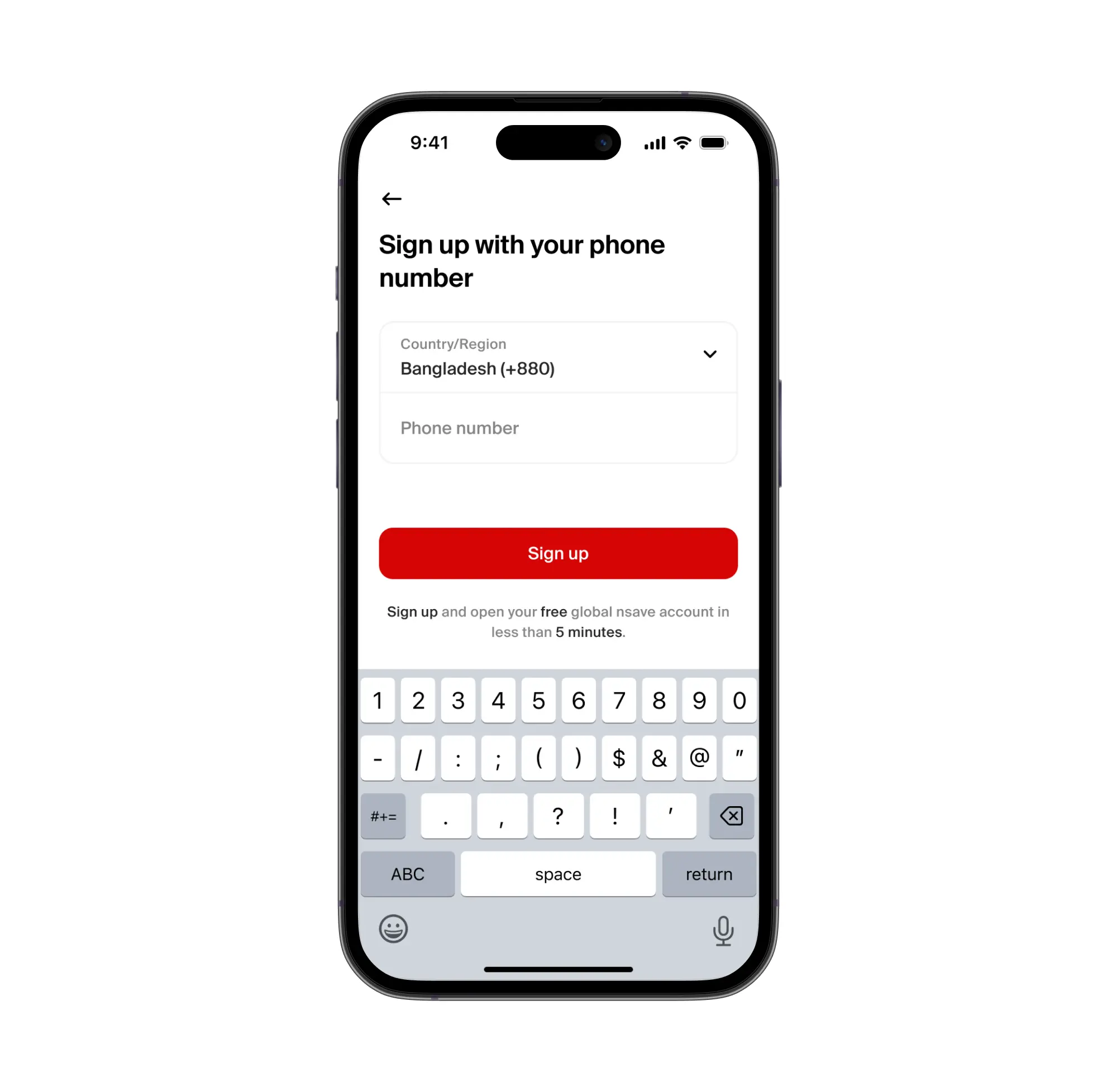
Your nsave account is free on the Standard plan ($0/month). Download the nsave app and complete verification using your passport or national ID, no branch visit, no minimum balance. Once verified, nsave assigns a personal ACH routing number and account number which you can share with any client or platform that pays via ACH or SWIFT.
Step 2: Set nsave as Your Payout Destination on Upwork, Fiverr
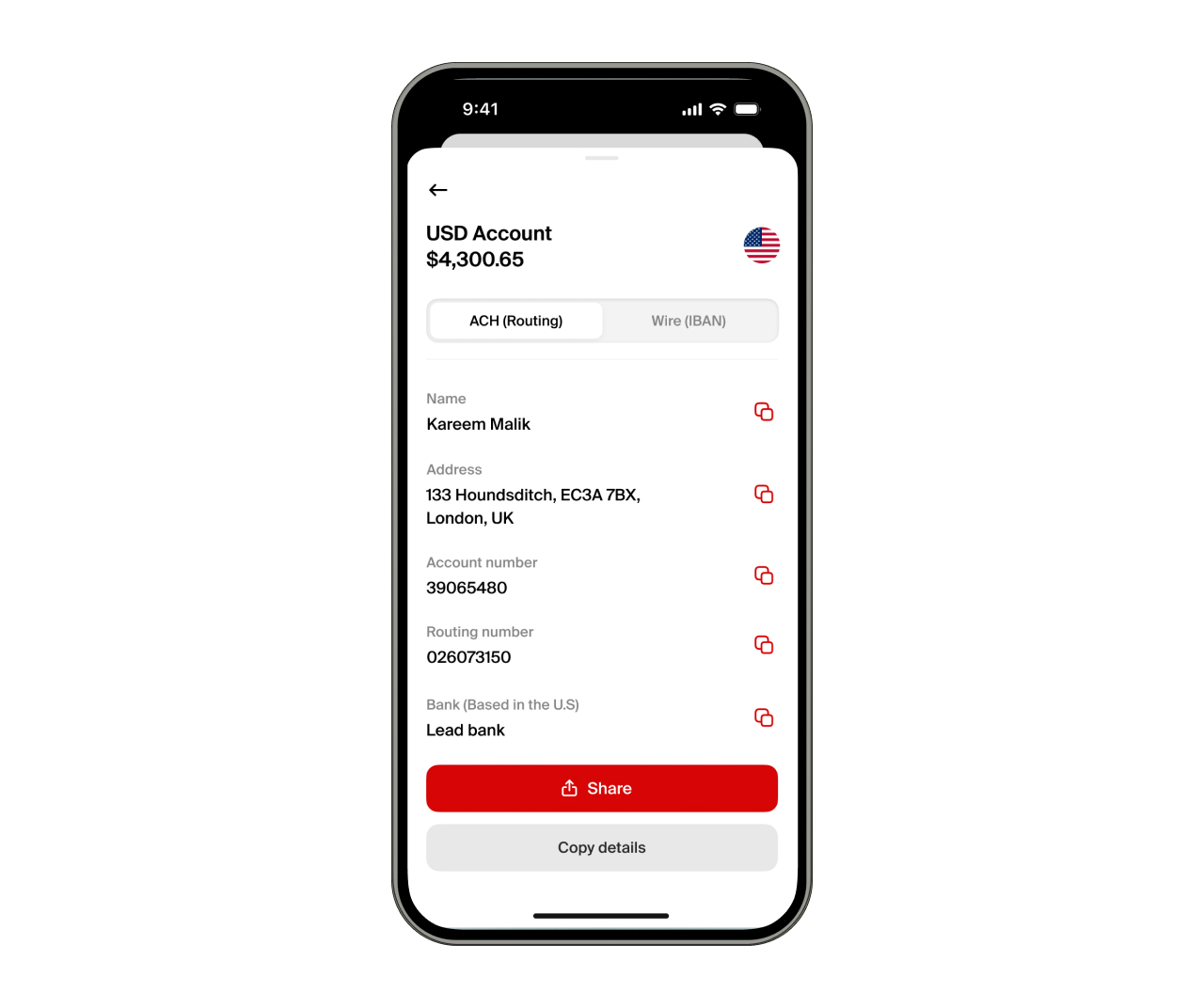
To direct earnings to your nsave account, log into your freelancing platform and set your payout method to "US bank transfer" or "ACH direct deposit," then enter your nsave ACH routing number and account number. Platforms that support this include Upwork, Fiverr, Toptal, Deel, PeoplePerHour, Freelancer.com, Payoneer, Wise, and direct client ACH or SWIFT transfers. Receiving via ACH or SWIFT is free on both Standard and Pro plans.
Step 3: Convert and Send to Your Local Bank Account or bKash

To send BDT to your bank account or bKash, open the nsave app, initiate a local currency withdrawal, and confirm the BDT amount shown before sending. The minimum payout fee is $1 (fees subject to change, check the nsave app for current rates).
Invest in US Stocks and ETFs Directly from Your nsave Balance
To invest in US stocks or ETFs, use the invest tab in the nsave app. nsave provides access to 500+ US stocks, ETFs, bonds, gold indices, and money market funds, starting from $1 with zero order fees (fees subject to change, check the nsave app for current rates). Sharia-compliant investing options are also available.
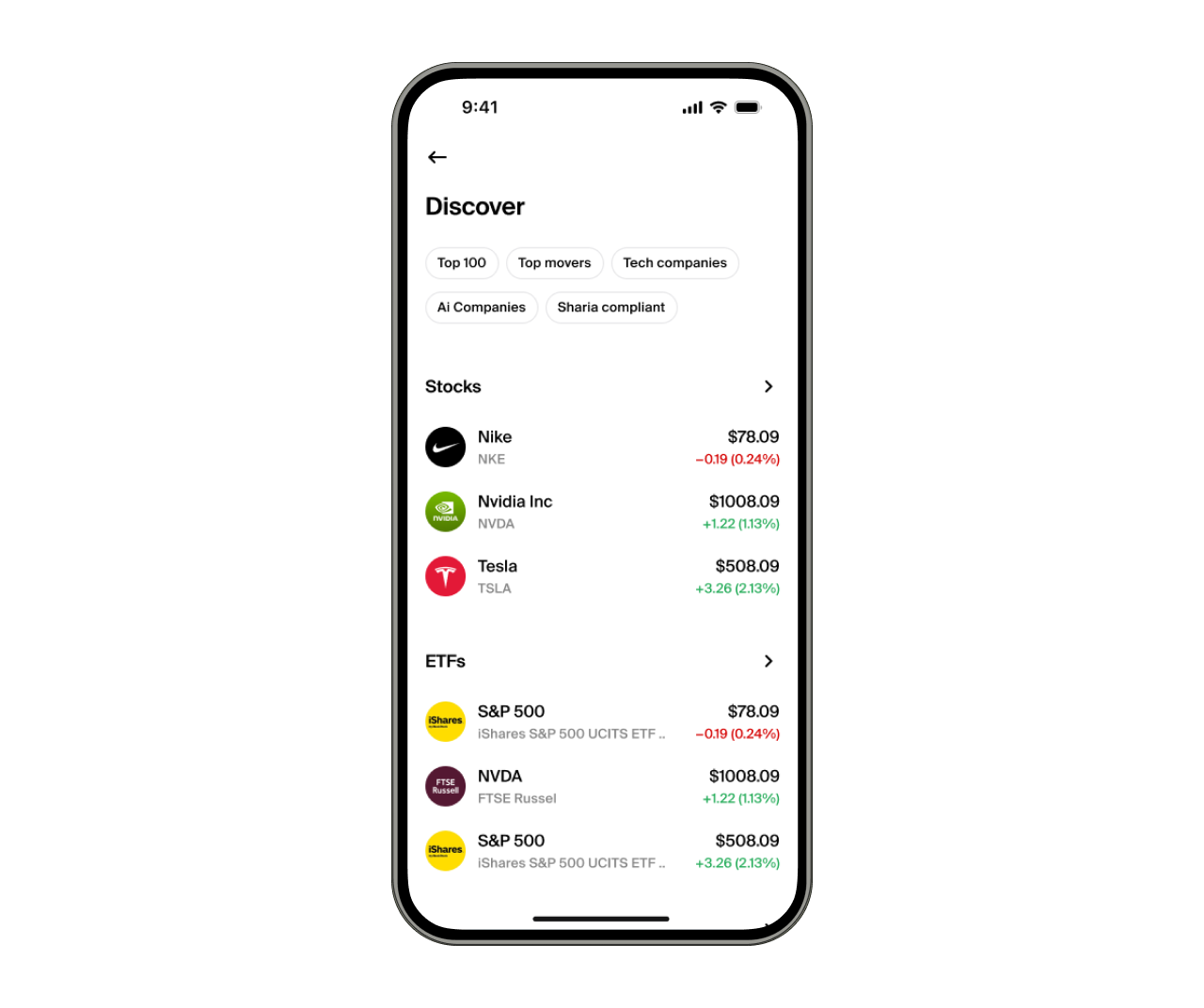
Disclaimer: Investments involve risks, including the potential loss of capital. Past performance is not indicative of future results. Data provided is for illustrative purposes only. Consult a licensed financial advisor before making any investment decisions. Investment accounts are provided by a third-party broker dealer. nsave is not a bank. Funds are not FSCS-protected.
Key Takeaways
An ERQ account is a Bangladesh Bank-regulated foreign currency account that lets eligible exporters and freelancers retain a portion of their inward foreign earnings in USD without mandatory immediate conversion to BDT. The current retention limit confirmed for ICT/freelance service exporters is 35% of inward remittances. The remaining 65% is credited to a linked BDT savings account.
Opening an ERQ account requires a Freelancer ID (from the ICT Division or BFDS), documentation of export income, and an in-branch application at an Authorised Dealer bank. The account is non-interest-bearing and restricts fund use to declared bonafide business purposes. ERQ balances cannot be used for overseas investment.
For freelancers who want to hold USD, earn daily rewards on it (rate variable, check the nsave app for current rates), and invest from the same balance without branch visits or retention percentage rules, nsave provides a complementary non-resident USD account that covers what an ERQ account does not.
The information in this article is provided for general informational and educational purposes only and does not constitute financial, legal, or tax advice from nsave or any of its affiliates. It is not a substitute for advice from a qualified financial advisor. We make no representations or warranties, whether expressed or implied, that the content is accurate, complete, or up to date.
Fees, exchange rates, incentives, and product availability may change and can vary by user and jurisdiction. Examples are illustrative only. Before making any financial decisions, seek advice from a qualified financial advisor who can assess your individual circumstances and objectives.
nsave helps freelancers and professionals from Bangladesh, Nigeria, Pakistan, Egypt, and beyond receive and manage USD abroad. As a non-bank payment provider, your money is not protected by the Financial Services Compensation Scheme (FSCS).
