

Cost of Living in Bangladesh (2026): Rent, Food, Salaries and Daily Expenses

This guide is for Bangladeshis benchmarking their own expenses, freelancers and remote workers assessing their purchasing power, and international employers understanding local costs.
According to a World Health Organization (WHO) country profile,41.7% of the population experienced financial hardship due to healthcare costs alone in 2025 (WHO). Per Numbeo's March 2026 data, a single person needs approximately ৳42,783/month ($349) to cover basic living expenses in Bangladesh, excluding rent. The average monthly net salary after tax is ৳29,476.
That gap , ৳13,307/month between what a single person needs and what the average worker earns, before rent , is the defining financial reality for urban Bangladeshis. Bangladesh looks cheap from outside and stretched from inside. This guide covers what life actually costs here in 2026: rent, food, transport, utilities, salaries, and where USD income changes the picture entirely.
Overview of Living Costs in Bangladesh
Per Numbeo's March 2026 data, estimated monthly living costs in Bangladesh , excluding rent , are approximately ৳42,783 ($349) for a single person and ৳154,392 ($1,258) for a family of four.
Bangladesh is one of the least expensive countries globally by nominal cost , but annual inflation running at 9.13% in February 2026 (source: BBS/BSS News, March 2026) has significantly increased day-to-day expenses over recent years. The numbers from two years ago no longer apply.
Dhaka is substantially more expensive than other Bangladeshi cities. Chittagong, Sylhet, Rajshahi, and smaller towns have lower rent and food costs across the board. All figures in this guide default to the national Numbeo dataset , Dhaka-specific costs for rent and food run above these averages.
The national average monthly net salary of ৳29,476 falls below the ৳42,783 single-person monthly cost estimate. The gap is bridged by shared housing, informal employment supplements, and multi-income households. These figures are national averages , actual costs vary significantly by lifestyle, location, and household structure.
Rent and Housing Costs
Rent for a one-bedroom apartment in a city centre in Bangladesh averages ৳12,174/month, ranging from ৳6,000 to ৳25,000 depending on city, building quality, and location.
| Apartment type | Average (BDT/month) | Range (BDT/month) |
|---|---|---|
| 1-bedroom City centre | ৳12,174 | ৳6,000 – ৳25,000 |
| 1-bedroom Outside centre | ৳6,019 | ৳3,000 – ৳12,000 |
| 3-bedroom City centre | ৳28,655 | ৳14,000 – ৳60,000 |
| 3-bedroom Outside centre | ৳16,605 | ৳8,000 – ৳35,000 |
Property purchase prices (for reference):
- Price per m² in city centre: ৳108,972 (range: ৳53,820–246,000)
- Price per m² outside city centre: ৳63,578 (range: ৳37,674–129,000)
- Annual mortgage interest rate: 10.56% (range: 8–14%)
The income-to-rent reality
A significant portion of Dhaka residents spend 35–50% of household income on rent. For a household earning the national average of ৳29,476/month net, a ৳12,174 city-centre one-bedroom consumes 41% of take-home pay , before a single grocery or transport cost is counted. This is why most middle-income urban families rent in outer areas, share accommodation, or live in extended family arrangements.
For example, a professional earning ৳35,000/month who rents a one-bedroom outside the city centre at ৳7,000/month spends 20% of salary on rent , still above the commonly recommended ceiling, but manageable compared to central Dhaka alternatives.
Food and Grocery Costs in Bangladesh
A meal at an inexpensive local restaurant in Bangladesh costs approximately ৳250; monthly grocery spend for a single person cooking at home runs approximately ৳4,000–6,000/month.
Average Grocery price in Bangladesh(Numbeo, March 2026):
| Item | Average price (BDT) | Range |
|---|---|---|
| Milk (1 litre) | ৳90.51 | ৳70 – ৳110 |
| White rice (1 kg) | ৳73.56 | ৳60 – ৳100 |
| Bread (500g loaf) | ৳67.45 | ৳38.58 – ৳120 |
| Eggs (12 large) | ৳142.28 | ৳100 – ৳180 |
| Chicken fillets (1 kg) | ৳319.31 | ৳150 – ৳600 |
| Beef (1 kg) | ৳789.36 | ৳650 – ৳1,000 |
| Tomatoes (1 kg) | ৳69.80 | ৳30 – ৳150 |
| Potatoes (1 kg) | ৳39.50 | ৳20 – ৳65 |
| Onions (1 kg) | ৳66.77 | ৳40 – ৳130 |
| Bananas (1 kg) | ৳103.81 | ৳50 – ৳200 |
| Apples (1 kg) | ৳300.20 | ৳180 – ৳400 |
| Bottled water (1.5L) | ৳33.97 | ৳25 – ৳45 |
Average Price of Eating out in Bangladesh (Numbeo, March 2026):
| Meal type | Average price (BDT) | Range |
|---|---|---|
| Inexpensive restaurant (1 person) | ৳250 | ৳100 – ৳500 |
| Mid-range restaurant, two people (3 courses) | ৳1,500 | ৳800 – ৳2,500 |
| Fast food combo meal | ৳560 | ৳500 – ৳900 |
| Cappuccino | ৳230 | ৳90 – ৳500 |
| Soft drink (0.33L) | ৳38.87 | ৳30 – ৳90 |
| Bottled water (0.33L) | ৳19.67 | No range available |
Monthly food budget estimates:
- Single person, home cooking: ৳4,000–6,000/month
- Single person, mixed eating habits: ৳6,000–10,000/month
- Family of four, home cooking: ৳12,000–20,000/month
Food and non-alcoholic beverage inflation reached 9.30% year-on-year in February 2026 (source: BBS, March 2026) , making groceries one of the fastest-rising budget lines for Bangladeshi households.
Transport Costs in Bangladesh
A single local bus or public transport ticket in Bangladesh costs approximately ৳50; petrol is ৳124.75/litre; and monthly transport costs for a regular commuter run approximately ৳1,500–4,000.
Average Transport Cost in Bangladesh(Numbeo, March 2026):
| Transport item | Average cost (BDT) | Range |
|---|---|---|
| Public transport | ||
| One-way local ticket | ৳50 | ৳20 – ৳100 |
| Monthly pass | ৳1,650 | ৳1,000 – ৳5,000 |
| Taxi | ||
| Start fare | ৳150 | ৳100 – ৳200 |
| Per km | ৳50 | ৳25 – ৳100 |
| 1 hour waiting | ৳300 | ৳180 – ৳500 |
| Fuel & vehicles | ||
| Petrol (1 litre) | ৳124.75 | ৳110 – ৳140 |
| New compact car (VW Golf equiv.) | ৳35,79,825 | ৳35,00,000 – ৳40,00,000 |
| New mid-size car (Toyota Corolla equiv.) | ৳37,73,856 | ৳30,00,000 – ৳50,00,000 |
Most urban commuters in Dhaka use buses, CNG auto-rickshaws, or ride-hailing apps including Pathao and Uber. CNG fares typically run ৳80–200 for an intra-city trip. Pathao motorcycle rides cost ৳50–120 for short to medium distances , the cheapest on-demand option. Intercity travel by AC bus from Dhaka to Chittagong costs ৳400–800; by train ৳200–700 depending on class.
Utilities and Internet Costs in Bangladesh
Monthly utility costs for a standard 85m² apartment in Bangladesh , covering electricity, heating, cooling, water, and garbage, average ৳3,735/month.
Average Utility Cost in Bangladesh (Numbeo, March 2026):
| Utility | Average monthly cost (BDT) | Range |
|---|---|---|
| Basic utilities, 85m² apartment Electricity, heating, cooling, water, garbage | ৳3,735 | ৳2,000 – ৳9,000 |
| Broadband internet Unlimited, 60+ Mbps | ৳1,663 | ৳1,000 – ৳3,500 |
| Mobile phone plan With calls and 10GB+ data | ৳646 | ৳300 – ৳1,000 |
Electricity is the dominant utility cost. Usage varies sharply by season , air conditioning from April to October pushes bills significantly above the annual average. Piped gas for cooking is available in parts of Dhaka; elsewhere LPG cylinders (12.5 kg) cost approximately ৳1,200–1,500 and last 1–2 months. Internet speeds and reliability have improved significantly in urban areas , 50–100 Mbps broadband is available at ৳1,000–2,000/month in most major cities.
Average Salaries in Bangladesh
The average monthly net salary in Bangladesh after tax is approximately ৳29,476 ($243), per Numbeo's March 2026 data , and this figure varies significantly by sector, experience, and location.
Average Salary in Bangladesh (as of March 2026):
| Salary metric | BDT / month | USD / month |
|---|---|---|
| Minimum wage — RMG sector Legal floor | ৳12,500 | ~$104 |
| Median monthly income (national) | ৳9,000 – ৳18,000 | ~$75 – $149 |
| Average monthly net salary (after tax) Benchmark | ৳29,476 | ~$243 |
| Entry-level / informal sector | ৳7,000 – ৳9,000 | ~$58 – $75 |
| Experienced professional IT · Finance · Management | ৳80,000 – ৳1,20,000+ | ~$665 – $1,000+ |
According to the Minimum Wage Board gazette, The RMG sector minimum wage is set at ৳12,500/month, effective December 2023 and as of 2026, no new statutory revision has replaced this figure.. This is the most clearly established minimum wage rate in any sector.
What is the average salary of a doctor in Bangladesh?
As of March 2026 (National Pay Scale), the average government medical officer in Bangladesh earns ৳16,000–23,000/month in base pay — a figure that rises to ৳80,000–200,000+/month for established private physicians in Dhaka who combine outpatient consultation fees with clinic income.
What is the average salary of a software engineer in Bangladesh?
As of March 2026 (Glassdoor/BBS), the average software engineer in Bangladesh earns ৳40,000–50,000/month, with senior developers and those contracted to international companies earning ৳80,000–150,000+/month.
What is the average salary of a teacher in Bangladesh?
As of March 2026 (National Pay Scale), the average government school teacher in Bangladesh earns ৳23,000–29,000/month in base pay, while private school teachers earn ৳15,000–35,000/month — and Dhaka-based tutors frequently double their formal salary through home tuition.
What is the average salary of a nurse in Bangladesh?
As of March 2026 (National Pay Scale), the average government nurse in Bangladesh earns ৳16,000–22,000/month, while nurses employed at private hospitals in Dhaka earn ৳20,000–35,000/month depending on specialisation and seniority.
What is the average salary of a civil engineer in Bangladesh?
As of March 2026 (National Pay Scale/BBS), the average civil engineer in Bangladesh earns ৳29,000–35,500/month in the government sector, while private sector civil engineers on infrastructure projects earn ৳50,000–120,000/month based on project scale and employer type.
What is the average salary of a garment worker in Bangladesh?
As of March 2026 (Minimum Wage Board gazette), the average garment worker in Bangladesh earns ৳12,500–22,000/month — ৳12,500 is the statutory minimum set in December 2023, while graded and experienced workers earn up to ৳22,000/month.
What is the average salary of a bank employee in Bangladesh?
As of March 2026 (BBS), the average bank employee in Bangladesh earns ৳25,000–80,000/month — entry-level officers at private commercial banks start at ৳25,000–40,000/month, while mid-career officers at institutions like BRAC Bank and Dutch-Bangla Bank earn ৳50,000–80,000/month.
What is the average salary of a government employee in Bangladesh?
As of March 2026 (National Pay Scale), the average government employee in Bangladesh earns ৳22,000–78,000/month in base pay across BCS grades 9 to 1, with house rent, medical, and transport allowances adding 35–65% on top of basic pay — making the effective total compensation substantially higher than the base figure alone.
What is the average salary of a lawyer in Bangladesh?
As of March 2026 (Bangladesh Bar Council/BBS), the average lawyer in Bangladesh earns ৳20,000–50,000/month at junior to mid-level, while senior advocates practising at the High Court Division or Supreme Court earn ৳100,000–500,000+/month depending on caseload and client type.
What is the average salary of an architect in Bangladesh?
As of March 2026 (BBS), the average architect in Bangladesh earns ৳30,000–60,000/month, with senior architects at private firms handling commercial real estate or international projects in Dhaka earning ৳80,000–150,000/month.
What is the average salary of a pharmacist in Bangladesh?
As of March 2026 (BBS), the average pharmacist in Bangladesh earns ৳20,000–45,000/month, with clinical pharmacists at private hospitals and pharmaceutical company medical representatives earning toward the upper end of that range.
What is the average salary of an accountant in Bangladesh?
As of March 2026 (BBS), the average accountant in Bangladesh earns ৳20,000–50,000/month, with ACCA or ICAB-qualified professionals at large private firms or multinational companies earning ৳60,000–100,000+/month.
What is the average salary of a freelancer in Bangladesh?
As of March 2026 (Numbeo), the average freelancer in Bangladesh earning USD on platforms like Upwork or Fiverr converts $400/month to approximately ৳48,800 at the ৳122/USD interbank rate — above the full single-person monthly expense threshold of ৳42,783 — placing consistent dollar earners structurally above the national average salary of ৳29,476/month.
What is the average salary of a pilot in Bangladesh?
As of March 2026 (Civil Aviation Authority of Bangladesh/BBS), the average commercial pilot at Biman Bangladesh Airlines earns ৳150,000–350,000/month, with captain-rank pilots on wide-body aircraft earning toward the upper end — making it one of the highest-paid professions in Bangladesh by monthly salary.c
What is the average salary of a Bangladesh Army officer?
As of March 2026 (National Pay Scale), the average Bangladesh Army officer earns ৳35,000–78,000/month in base pay depending on rank, with additional free housing, medical, ration, and transport allowances reducing effective cost of living — making the total compensation package significantly higher than the base salary figure suggests.
The purchasing power problem
The average net salary of ৳29,476 falls below Numbeo's estimated single-person monthly cost of ৳42,783 (excluding rent). Adding even the cheapest independent one-bedroom outside the city centre at ৳6,019 raises the required total to ৳48,802 , 65% above the average take-home salary. This explains why most Bangladeshi households rely on shared accommodation, multiple incomes, or extended family support to manage expenses.
Freelancers and remote workers
Bangladeshis earning USD from international platforms such as Upwork, Fiverr, and Deel operate in a structurally different position. At an exchange rate of approximately ৳122/USD (interbank spot rate, end December 2025; source: MPS H2FY26), $400/month USD income translates to approximately ৳48,800 , above the full single-person expenses threshold. USD income at $500–$1,000/month places earners well above the national average salary.
What is the Average Healthcare Cost in Bangladesh?
Bangladesh does not have functioning universal health insurance , 68.5% of all healthcare costs are paid out of pocket by patients, and 41.7% of the population experienced financial hardship due to healthcare costs in 2025 (WHO).
Government healthcare: Public hospitals are nominally free for basic services but severely underfunded. In government hospitals, only 3% of patients receive free medicine and 14.9% receive diagnostic services. Most patients visit private diagnostic centres and pharmacies for anything beyond a basic consultation.
Private healthcare costs: Private specialist consultation fees run ৳500–700 per visit for general specialists and ৳1,500–3,000 for senior consultants. Private hospital inpatient care costs ৳10,000–80,000+ depending on the procedure and facility.
Health insurance: Formal private health insurance covers only 0.4% of the population. The market is growing but remains nascent. Corporate employees in formal-sector jobs receive employer-provided group health coverage through companies such as Green Delta Insurance or Pragati Life , but this reaches only a fraction of the workforce. Most households self-insure through savings, which creates significant financial vulnerability when a hospitalisation represents several months of salary.
What is the Average Educational Costs in Bangladesh?
Private full-day preschool or kindergarten in Bangladesh costs approximately ৳4,337/month per child; international primary school tuition averages ৳205,241/year (~$1,695).
Education costs (Numbeo, March 2026):
| Education type | Average cost | Range |
|---|---|---|
| Private full-day preschool / kindergarten Monthly | ৳4,337/month ৳52,046/year | ৳2,000 – ৳15,000/month |
| International primary school Annual tuition | ৳2,05,241/year | ৳96,000 – ৳5,00,000/year |
Government schools are nominally free and widely used. Private Bangla-medium schools charge ৳500–3,000/month in tuition and associated fees. English-medium schools , strongly associated with career mobility into multinational or digital sectors , range from ৳5,000 to ৳30,000/month. Coaching centres for SSC and HSC exam preparation add ৳1,000–3,000/month per subject. For families with two children in private English-medium schools, education alone consumes ৳15,000–50,000/month , often the second largest expense after rent.
What is the Average Gym, Cinema, Lifestyle Clothing Cost in Bangladesh?
A monthly gym membership in Bangladesh costs approximately ৳1,551; a cinema ticket to an international release is approximately ৳500.
Leisure costs (Numbeo, March 2026):
| Item | Average cost (BDT) | Range |
|---|---|---|
| Monthly gym / fitness club membership | ৳1,551 | ৳500 – ৳3,500 |
| Tennis court rental (1 hour, weekend) | ৳1,414 | ৳1,000 – ৳2,000 |
| Cinema ticket (international release) | ৳500 | ৳350 – ৳750 |
Clothing costs (Numbeo, March 2026):
| Item | Average price (BDT) |
|---|---|
| Levi's 501 jeans (or equivalent) | ৳2,042 |
| Summer dress (chain store equivalent) | ৳2,243 |
| Nike running shoes (mid-range) | ৳4,570 |
| Men's leather business shoes | ৳3,942 |
Bangladesh is a global garment manufacturing hub , local and unbranded clothing is available at dramatically lower prices than the branded equivalents above. Most Bangladeshis purchase clothing from local markets at ৳200–1,000 per item.
What Does Monthly Budget Looks Like in Bangladesh
A single working professional in Dhaka living modestly needs approximately ৳25,000–35,000/month; a comfortable urban lifestyle requires ৳50,000–70,000/month; a family of four needs approximately ৳80,000–120,000/month.
Budget Tier 2: Moderate (single professional, independent apartment):
| Category | Monthly cost (BDT) |
|---|---|
| Rent (1BR, mid-location) | ৳8,000 – ৳12,174 |
| Food (mixed eating habits) | ৳7,000 – ৳10,000 |
| Transport | ৳2,000 – ৳4,000 |
| Utilities + internet | ৳3,000 – ৳5,000 |
| Personal + miscellaneous | ৳3,000 – ৳6,000 |
| Total estimate | ৳23,000 – ৳37,174 |
Budget Tier 3: Comfortable (family of four, city area)
Approximate total: ৳80,000–120,000/month. This covers a 3-bedroom apartment, private school fees for two children, private transport, occasional dining out, and a healthcare buffer. This Numbeo family-of-four estimate of ৳154,392/month excluding rent reflects a comfortable, internationally-oriented standard. Most Bangladeshi middle-class families maintain a comfortable but locally-adapted lifestyle significantly below this figure.
Is Bangladesh Expensive to Live In?
Bangladesh is inexpensive by global standards but expensive relative to most local salaries , particularly in Dhaka, where the average take-home salary of ৳29,476 falls below the ৳42,783 estimated monthly cost for a single person excluding rent.
By international comparison: Bangladesh is one of the most affordable countries globally , per Numbeo data it is 19.5% cheaper than Nigeria and significantly cheaper than most of Asia, Europe, and North America. For someone earning a developed-world income and living in Bangladesh, purchasing power is exceptional.
By local wage comparison: the picture is harder. Average net salary: ৳29,476. Single-person monthly cost excluding rent: ৳42,783. Add the cheapest independent one-bedroom at ৳6,019: total required is ৳48,802. The average salary covers 60% of that. This gap is real and grows with sustained inflation running above 9% annually.
For Bangladeshis who earn in USD , from freelance work on Upwork or Fiverr, from a foreign employer, or from international clients , the financial picture changes completely. At today's (March 23rd) exchange rate, $400/month covers a moderate single-person lifestyle with room to spare. $1,000/month places an earner at senior professional level by local standards. The question for USD earners is not whether their income is enough , it typically is , but whether they are managing the gap between earning in USD and spending in BDT as effectively as possible.
For Bangladeshis earning USD from international clients or employers, local costs are well within reach , but every dollar lost to poor conversion timing, low exchange rates, or idle balances is a cost that compounds over time. nsave gives USD earners a non-resident USD account, converts to BDT on their own schedule, and sends directly to your local account or bKash. nsave helps freelancers and professionals from Bangladesh, Nigeria, Pakistan, Egypt and beyond receive and manage USD abroad.
How to Make USD Income Go Further in Bangladesh with nsave
To make your USD income go further in Bangladesh, open a nsave USD account, receive your earnings directly, and convert to BDT on your own timeline.
Step 1: Open Your nsave USD Account
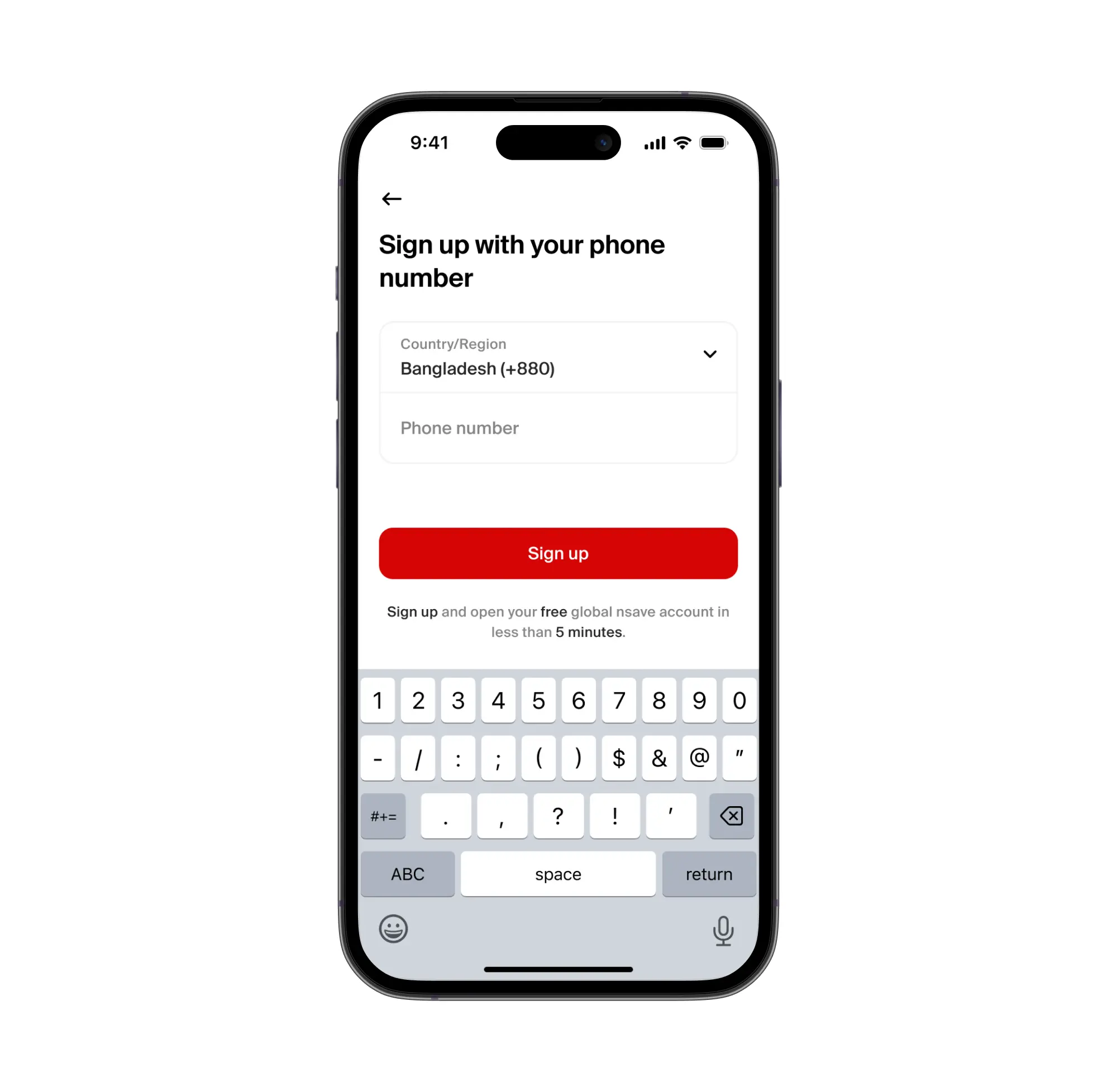
Your nsave account is free on the Standard plan ($0/month). Download the nsave app and complete identity verification using your passport or national ID , under 10 minutes, no branch visit required. Once verified, nsave assigns a personal ACH routing number and account number.
New to nsave? Watch how to set up your account in under 10 minutes:
Step 2: Receive Your USD Earnings
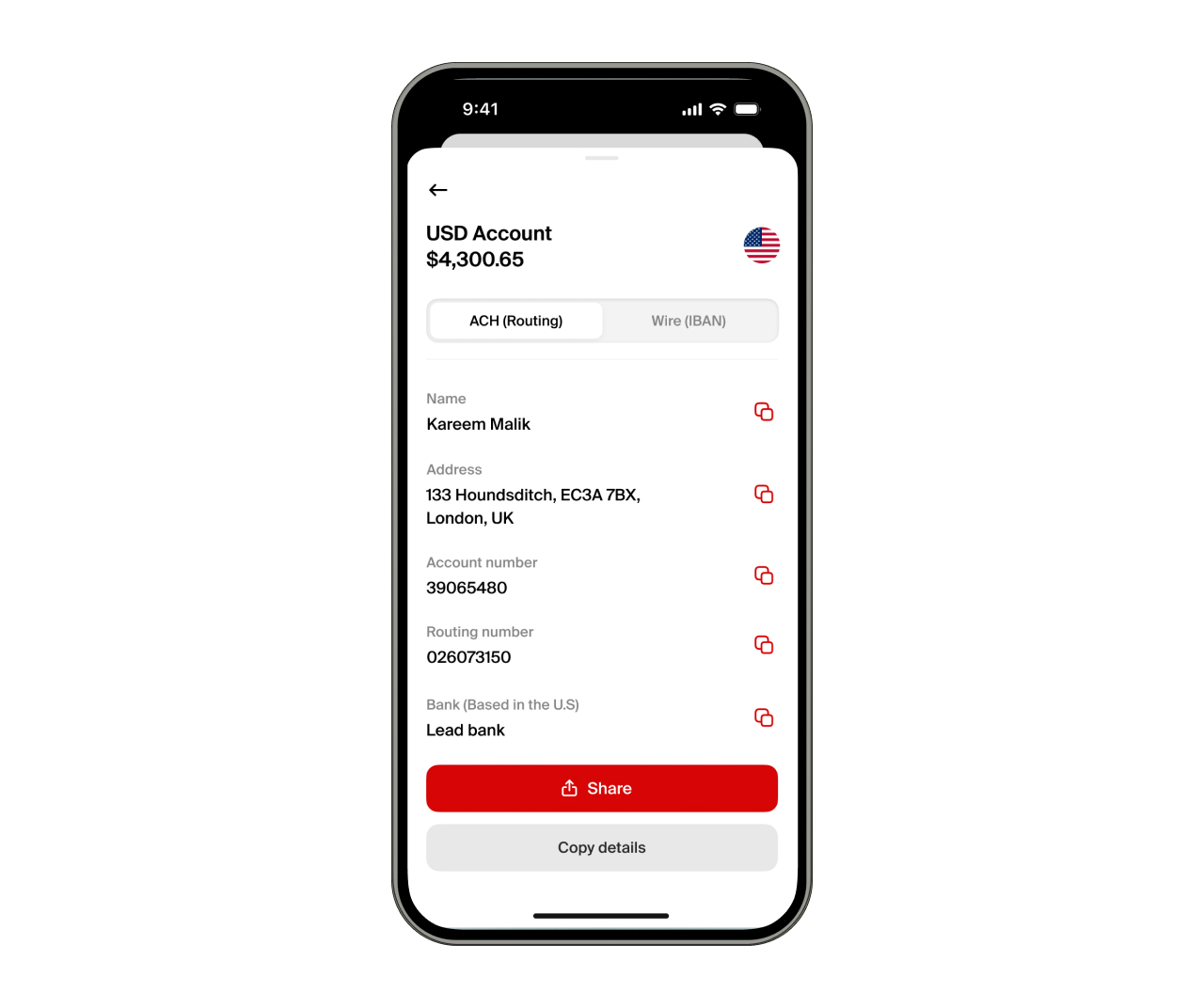
To receive USD via nsave, share your ACH details as your payout destination on Upwork, Fiverr, Toptal, Freelancer.com, PeoplePerHour, Deel, or any platform that pays to US accounts. Direct clients can send via SWIFT. Payoneer and Wise can also transfer USD to your nsave account. Receiving via ACH or SWIFT is free on both Standard and Pro plans. The USD lands in your nsave account unconverted , you control when conversion happens.
Step 3: Convert to BDT and Send to Your Local Account
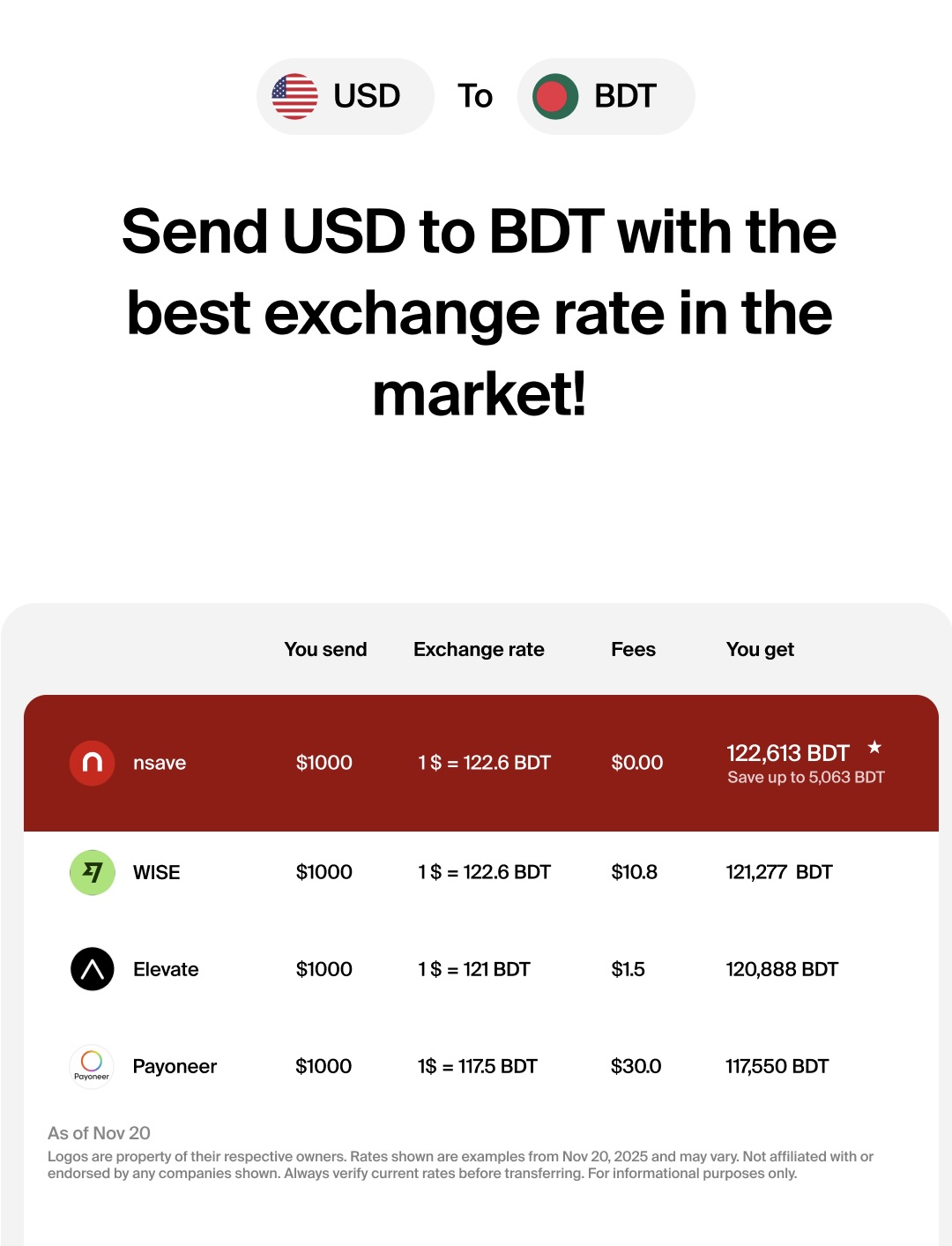
To convert USD to BDT, initiate a local currency withdrawal inside the nsave app. The exact BDT amount is shown before you confirm , you see the rate before committing and the minimum transfer fee is $1 (check rates on nsave app, as fees may change). nsave is not a bank. Funds are not FSCS-protected.
Key Takeaways
Per Numbeo's March 2026 data, estimated monthly living costs in Bangladesh excluding rent are approximately ৳42,783 ($349) for a single person and ৳154,392 ($1,258) for a family of four. Key confirmed figures: one-bedroom apartment in a city centre averages ৳12,174/month; inexpensive restaurant meal ৳250; petrol ৳124.75/litre; basic utilities ৳3,735/month; broadband internet ৳1,663/month. The average monthly net salary after tax is ৳29,476 , below the single-person monthly expense baseline, meaning most households rely on shared accommodation, multiple incomes, or reduced consumption to manage.
Annual inflation stands at 9.13% in February 2026 (source: BBS/BSS News, March 2026). Real purchasing power has declined for most Bangladeshi households. Healthcare remains a major financial risk, with 68.5% of all medical costs paid out of pocket and only 0.4% of the population holding any health insurance.
For Bangladeshis who earn in USD, nsave provides a non-resident USD account , BDT conversion on demand at a $1 minimum fee, and access to US market investments , helping USD earners get the most from their income before and after conversion. (investment accounts provided by a third-party broker dealer; investments involve risk).
Investment accounts are provided by a third-party broker dealer. Investments involve risks including the potential loss of capital. Consult a licensed financial advisor before making any investment decisions.
The information in this article is provided for general informational and educational purposes only and does not constitute financial, legal, or tax advice from nsave or any of its affiliates. It is not a substitute for advice from a qualified financial advisor. We make no representations or warranties, whether expressed or implied, that the content is accurate, complete, or up to date.
Fees, exchange rates, incentives, and product availability may change and can vary by user and jurisdiction. Examples are illustrative only. Before making any financial decisions, seek advice from a qualified financial advisor who can assess your individual circumstances and objectives.
nsave helps freelancers and professionals from Bangladesh, Nigeria, Pakistan, Egypt, and beyond receive and manage USD abroad. As a non-bank payment provider, your money is not protected by the Financial Services Compensation Scheme (FSCS).
