

Cost of Living in Pakistan (2026): Rent, Food, Salaries and Daily Expenses

As of June 2026, the cost of living in Pakistan is approximately Rs98,851 ($355) per month for a single person excluding rent, and Rs332,761 ($1,195) for a family of four, according to a 2026 Numbeo report on the cost of living in Pakistan, a global crowd-sourced cost-of-living database.
Rent for a one-bedroom apartment in a city centre averages Rs36,088/month. Food for a single person cooking at home runs roughly Rs15,000 to Rs25,000/month, and a meal at an inexpensive restaurant costs around Rs600.
As of June 2026, the average monthly net salary after tax is Rs51,372. Daily expenses such as petrol at Rs373.78/litre and basic utilities at Rs30,048/month push the everyday budget higher still.
That last comparison exposes the core tension of life in Pakistan today, because the average salary of Rs51,372 covers barely half of the Rs98,851 a single person needs before rent is even counted. Pakistan looks cheap from the outside and stretched from the inside.
As of May 2026, headline inflation had climbed back to 11.7% year-on-year, the highest reading since June 2024, according to a 2026 Business Recorder report on Pakistan's May inflation data, so the budget numbers from a year ago no longer apply.
This guide is written for any Pakistani benchmarking their own expenses, any freelancer or remote worker weighing their purchasing power, and any returning expat mapping local costs before the move. It walks through what life actually costs here in 2026 across rent, food, transport, utilities, and salaries, and shows where USD income changes the picture entirely.
Overview of Living Costs in Pakistan
As of June 2026, estimated monthly living costs in Pakistan excluding rent are approximately Rs98,851 ($355) for a single person and Rs332,761 ($1,195) for a family of four, according to a 2026 Numbeo report on the cost of living in Pakistan.
Pakistan is one of the less expensive countries globally by nominal cost. However, inflation has sharply increased day-to-day expenses over the past two years.
According to a 2026 International Monetary Fund explainer on inflation, inflation is "the rate of increase in prices over a given period of time". In other words, the same amount of rupees buys you less than it did before. As of May 2026, that rate stood at 11.7% year-on-year, the highest reading since June 2024, per a 2026 Business Recorder report on Pakistan's May CPI, which means a household budget set even twelve months ago now understates what the same basket costs you.
Islamabad is the most expensive city in the country, followed closely by Lahore and Karachi. Numbeo's cost-of-living index places Islamabad at 25.2, with Lahore and Karachi tied at 21.7 and Rawalpindi at 21.5, so the capital runs roughly 15% above the major commercial cities on everyday costs, according to a 2026 Numbeo index of Pakistani cities.
The national average monthly net salary of Rs51,372 falls far below the Rs98,851 single-person monthly cost estimate. Consequently, the gap is bridged in practice by shared housing, family-owned homes, informal income supplements, and multi-income households.
These figures are national averages, because actual costs vary significantly by lifestyle, city, and household structure.
Rent and Housing Costs in Pakistan
As of June 2026, rent for a one-bedroom apartment in a city centre in Pakistan averages Rs36,088/month, ranging widely by city, building quality, and neighbourhood, according to a 2026 Numbeo report on rent prices in Pakistan.
| Apartment Type | Average (PKR/month) |
|---|---|
| 1-bedroom city centre | Rs 36,088 |
| 1-bedroom outside centre | Rs 20,596 |
| 3-bedroom city centre | Rs 79,824 |
| 3-bedroom outside centre | Rs 47,123 |
Community reports add useful texture to these averages. Pakistani FIRE communities, online groups of savers pursuing Financial Independence and Retiring Early, track living costs city by city. Discussions within those communities in 2026 put a one-kanal upper portion in a good part of Lahore at around Rs65,000 to Rs75,000/month, with one member paying Rs65,000 against a Rs75,000 market rate, and a resident in a Rawalpindi cantonment area reported Rs60,000 to Rs70,000 for a newly built portion.
Accordingly, if you are a returning family eyeing an upscale Islamabad neighbourhood, you should budget toward the higher end, because the capital's gated communities and Defence Housing Authority (DHA) developments command the steepest rents in the country.
The income-to-rent reality is stark. For a household earning the national average of Rs51,372/month net, a Rs36,088 city-centre one-bedroom consumes 70% of take-home pay before a single grocery or transport cost is counted. As a result, most middle-income urban families rent in outer areas, live in family-owned homes, or pool multiple incomes under one roof.
For example, if you are a salaried professional in Lahore earning Rs90,000/month and you rent a one-bedroom outside the city centre at Rs20,596/month, you spend 23% of your salary on rent.
That figure sits close to the commonly cited one-third ceiling, although it stays sustainable only because the rest of the household budget is kept tight. In practice, rent is the line that decides everything else, which is why the next cost most families track so closely is food.
Food and Grocery Costs in Pakistan
As of June 2026, a meal at an inexpensive local restaurant in Pakistan costs approximately Rs600, and monthly grocery spend for a single person cooking at home runs approximately Rs15,000 to Rs25,000/month, per a 2026 Numbeo report on food prices in Pakistan.
Average grocery prices in Pakistan
| Item | Average Price (PKR) |
|---|---|
| Milk (1 litre) | Rs 241 |
| White rice (1 kg) | Rs 333 |
| Fresh white bread (1 lb loaf) | Rs 149 |
| Eggs (12 large) | Rs 331 |
| Chicken fillets (1 kg) | Rs 786 |
| Beef (1 kg) | Rs 1,341 |
| Tomatoes (1 kg) | Rs 143 |
| Potatoes (1 kg) | Rs 95 |
| Onions (1 kg) | Rs 111 |
| Apples (1 kg) | Rs 315 |
| Bananas (1 kg) | Rs 180 |
| Bottled water (1.5L) | Rs 141 |
Average price of eating out in Pakistan
| Meal Type | Average Price (PKR) |
|---|---|
| Inexpensive restaurant (1 person) | Rs 600 |
| Mid-range restaurant, two people (3 courses) | Rs 4,000 |
| Fast food combo meal | Rs 1,500 |
| Cappuccino | Rs 557 |
| Soft drink (0.33L) | Rs 102 |
| Bottled water (0.33L) | Rs 64 |
As of March 2026, food and beverage prices remained one of the fastest-moving budget lines, with wheat flour, wheat, onions, and meat among the leading contributors to the year-on-year rise, according to a 2026 IndexBox report on Pakistan's May inflation. Therefore, the grocery figure a household used last year now understates the real shop.
Community estimates run higher than the single-person figure once a family is involved. Discussions within Pakistani migration communities in 2025 report that groceries for a family of four eating well, with meat or chicken every other day, run between Rs60,000 and Rs100,000/month.
Monthly food budget estimates:
- Single person, home cooking: Rs15,000 to Rs25,000/month.
- Single person, mixed eating habits: Rs25,000 to Rs40,000/month.
- Family of four, home cooking: Rs50,000 to Rs100,000/month.
Groceries are the line families feel first when inflation moves, which is why so many households watch the next category, transport, with the same anxiety.
Transport Costs in Pakistan
As of June 2026, a single local bus ticket in Pakistan costs approximately Rs50, petrol is Rs373.78/litre, and monthly transport costs for a regular commuter run approximately Rs5,000 to Rs15,000, drawing on a 2026 Numbeo report on transport costs in Pakistan.
Average transport cost in Pakistan
| Transport Item | Average Cost (PKR) |
|---|---|
| One-way local ticket | Rs 50 |
| Monthly public transport pass | Rs 2,750 |
| Taxi start (standard tariff) | Rs 250 |
| Taxi per km | Rs 150 |
| Petrol (1 litre) | Rs 373.78 |
| New compact car (VW Golf equiv.) | Rs 5,000,000 |
| New mid-size car (Toyota Corolla equiv.) | Rs 7,024,600 |
Petrol is the cost that ripples through everything else. As of 13 June 2026, the government fixed petrol at Rs373.78/litre after a fifth consecutive fortnightly reduction by OGRA, the Oil and Gas Regulatory Authority that reviews fuel prices every two weeks, although high-speed diesel held at Rs378.78/litre and prices remain subject to change, according to a 2026 ARY News report on Pakistan's June petrol price.
Notably, transport inflation hit 36.8% year-on-year in May 2026, the single fastest-rising category in the entire consumer basket, per a 2026 IndexBox report on Pakistan's May inflation. Therefore, even with recent pump-price relief, the cost of getting around remains painful for daily commuters.
Most urban commuters in Lahore, Karachi, and Islamabad rely on a mix of buses, ride-hailing apps such as Careem, inDrive, and Bykea, and rickshaws running on CNG, which is compressed natural gas used as a cheaper vehicle fuel. Bike-hailing remains the most affordable on-demand option for short trips, because a single motorcycle fare costs a fraction of a four-wheel ride.
Community reports show how quickly fuel-dependent budgets escalate. For example, a returnee within Pakistani personal-finance discussions reported in 2025 that running a car on a daily commute costs Rs30,000 to Rs40,000/month on petrol alone.
As a result, transport is the category where solar power and fuel-efficient choices pay off fastest, which leads directly into the utility bills that dominate so many Pakistani household budgets.
Utilities and Internet Costs in Pakistan
As of June 2026, monthly utility costs for a standard 915-square-foot apartment in Pakistan, covering electricity, heating, cooling, water, and garbage, average Rs30,048/month, according to a 2026 Numbeo report on utility costs in Pakistan.
Average utility cost in Pakistan
| Utility | Average Monthly Cost (PKR) |
|---|---|
| Basic utilities, 915 sq ft apartment | Rs 30,048 |
| Broadband internet (unlimited, 60+ Mbps) | Rs 4,307 |
| Mobile phone plan (calls + 10GB data) | Rs 1,491 |
Electricity is the single most discussed cost in Pakistani household budgets, and for good reason. As of May 2026, the housing, water, electricity, gas, and fuels index rose 16.78% year-on-year, per a 2026 IndexBox report on Pakistan's May inflation, and summer air-conditioning pushes bills far above the annual average.
Meanwhile, NEPRA, the National Electric Power Regulatory Authority that sets electricity tariffs, announced a quarterly reduction of Rs1.99 per unit for June to August 2026, according to a 2026 Dawn report on NEPRA's electricity tariff cut. However, that relief stays modest, because the base tariff already sits above Rs31 per unit.
Community reports reveal the real spread behind that average as discussions within Pakistani migration communities in 2025 report summer electricity bills of Rs50,000 to Rs80,000/month without solar for a family running air conditioning, while members of Pakistani communities with solar panels reported bills closer to Rs1,500 to Rs2,400 even in peak summer.
Accordingly, solar power has become the defining middle-class investment of the decade in Pakistan, because it removes the most volatile line in the entire household budget.
Internet and mobile connectivity, by contrast, remain comparatively affordable, with reliable broadband widely available in major cities. That matters enormously for the freelancers and remote workers who increasingly anchor household income, which brings the conversation to salaries.
Average Salaries in Pakistan
As of June 2026, the average monthly net salary in Pakistan after tax is approximately Rs51,372 ($184), and this figure varies significantly by sector, experience, and city, according to a 2026 Numbeo report on average salaries in Pakistan.
Average salary benchmarks in Pakistan (as of June 2026):
| Salary Metric | PKR / month | USD / month |
|---|---|---|
| Average monthly net salary (after tax) | Rs 51,372 | ~$184 |
| Income tax exemption threshold | Rs 50,000 | ~$179 |
| Per capita income (annual, FY2025-26) | Rs 530,000+ | ~$1,901 |
| Experienced IT / finance professional | Rs 150,000 – Rs 400,000+ | ~$537 – $1,433+ |
As of June 2026, the income tax exemption threshold stayed unchanged at Rs50,000/month in the FY2026-27 budget, which is the government's annual spending and revenue plan, so anyone earning above that figure now falls into the tax net, according to a 2026 Business Recorder report on Pakistan's FY2026-27 budget.
Meanwhile, per capita income rose 9% year-on-year to $1,901 in the 2025-26 fiscal year, according to a 2026 Geo News report on the Pakistan Economic Survey 2025-26, the finance ministry's annual review of the economy. Admittedly, that headline gain is real, although most households have not felt it at the till, because inflation has absorbed it.
What is the average salary of a software engineer in Pakistan?
As of June 2026, a software engineer in Pakistan typically earns Rs150,000 to Rs250,000/month at mid-level, and senior developers contracted to international companies earn Rs300,000 to Rs600,000+/month. Notably, Pakistan's IT sector retained its income tax exemption until June 2029 in the latest budget, which keeps export-focused tech earnings comparatively attractive, per a 2026 Business Recorder report on the FY2026-27 budget.
What is the average salary of a doctor in Pakistan?
As of June 2026, a government medical officer in Pakistan earns roughly Rs90,000 to Rs150,000/month in base pay including allowances, while established private consultants in major cities combine clinic income and consultation fees to earn Rs300,000 to Rs1,000,000+/month.
What is the average salary of a government employee in Pakistan?
As of June 2026, a federal government employee earns roughly Rs50,000 to Rs250,000/month in base pay across pay grades. Subsequently, the FY2026-27 budget added a 7% salary increase for public servants on top of housing, medical, and transport allowances that lift effective compensation well above base pay, according to a 2026 Dawn report on Pakistan's FY2026-27 budget.
What is the average salary of a freelancer in Pakistan?
As of June 2026, a freelancer in Pakistan earning $400/month on platforms such as Upwork or Fiverr converts that to approximately Rs112,000 at the Rs279/USD interbank rate. According to a 2026 Corporate Finance Institute resource on the interbank rate, the interbank rate is "the wholesale price at which major financial institutions trade foreign currencies directly with each other". That figure places consistent dollar earners structurally above the national average salary of Rs51,372/month. However, the conversion rate, the receiving channel, and the timing together decide how much of that dollar income actually survives the trip into rupees.
What is the average salary of a bank employee in Pakistan?
As of June 2026, a bank employee in Pakistan earns roughly Rs60,000 to Rs200,000/month, with entry-level officers at private commercial banks starting near Rs60,000 and mid-career officers at large institutions earning toward the upper end.
The purchasing power problem
As of June 2026, the average net salary of Rs51,372 falls far below Numbeo's estimated single-person monthly cost of Rs98,851 excluding rent. Adding even the cheapest independent one-bedroom outside the city centre at Rs20,596 raises the required total to Rs119,447, which is more than double the average take-home salary.
Consequently, most Pakistani households rely on family-owned homes, multiple incomes, or extended-family support to manage expenses. That same maths explains why so many young professionals now discuss emigration or USD-earning remote work as the only realistic path to a comfortable life.
Freelancers and remote workers
Pakistanis earning USD from international platforms such as Upwork, Fiverr, and Deel operate in a structurally different position. As of June 2026, at an interbank rate of approximately Rs279/USD, per a 2026 Trading Economics report on the Pakistani rupee, $400/month of USD income translates to roughly Rs112,000, comfortably above the full single-person expenses threshold. Likewise, USD income at $1,000 to $2,000/month places earners well above the national professional average.
Community discussions reinforce that pattern. Discussions within Pakistani retirement communities in 2025 report the same lifestyle maths, where a steady $2,000/month in passive or remote USD income lets a family live very comfortably in most Pakistani cities.
Over time, managing dollar income well has become a central financial skill, which is exactly the problem the final sections of this guide address.
What is the Average Healthcare Cost in Pakistan?
As of June 2026, Pakistan has no comprehensive universal health insurance, so most healthcare is paid out of pocket, with private specialist consultation fees running roughly Rs2,000 to Rs5,000 per visit.
Government healthcare is nominally free at public hospitals. However, it is chronically underfunded and overcrowded, which pushes most households toward private clinics and diagnostic centres for anything beyond a basic consultation. As a result, private specialist fees, diagnostics, and inpatient care add up quickly, and a single hospitalisation can equal several months of an average salary.
Health insurance penetration remains low. Nevertheless, the government's Sehat Card, a provincial health-financing scheme that covers inpatient treatment at empanelled hospitals, has expanded coverage for many families in recent years.
Admittedly, most middle-income households still self-insure through savings, which creates real financial vulnerability when a major medical event hits. That exposure is one reason a stable, separately held pool of money matters so much for Pakistani families, a point that connects directly to how USD earners manage their income.
What is the Average Educational Costs in Pakistan?
As of June 2026, private full-day preschool or kindergarten in Pakistan costs approximately Rs11,640/month per child, and international primary school tuition averages Rs379,253/year (~$1,360), according to a 2026 Numbeo report on education costs in Pakistan.
Education Costs in Pakistan
| Education Type | Average Cost |
|---|---|
| Private preschool / kindergarten (monthly) | Rs 11,640/month |
| International primary school (annual tuition) | Rs 379,253/year |
Government schools are free and widely used, while private English-medium schools, strongly associated with career mobility, charge anywhere from Rs5,000 to Rs70,000/month depending on the institution.
Community reports sharpen the picture for returning families. For example, discussions within Pakistani migration communities in 2025 report school fees of Rs25,000 to Rs70,000/month per child for established private schools such as Beaconhouse, City School, and Roots, with one returnee budgeting Rs60,000 to Rs70,000/month per child at the top tier.
Consequently, if you have two children in private English-medium schools, education alone can consume Rs50,000 to Rs140,000/month, which often makes it your second-largest expense after rent.
Taken together, schooling is where the gap between local salaries and an internationally oriented standard of living becomes most visible, which is why lifestyle and leisure costs round out the picture.
What is the Average Gym, Cinema, Lifestyle Clothing Cost in Pakistan?
As of June 2026, a monthly gym membership in Pakistan costs approximately Rs4,264, and a cinema ticket to an international release is approximately Rs1,200, according to a 2026 Numbeo report on leisure costs in Pakistan.
Leisure and clothing costs in Pakistan
| Item | Average Price (PKR) |
|---|---|
| Monthly gym / fitness club membership | Rs 4,264 |
| Tennis court rental (1 hour, weekend) | Rs 2,765 |
| Cinema ticket (international release) | Rs 1,200 |
| Levi's 501 jeans (or equivalent) | Rs 4,327 |
| Summer dress (chain store) | Rs 6,113 |
| Nike running shoes (mid-range) | Rs 21,109 |
| Men's leather business shoes | Rs 8,968 |
Pakistan has a large domestic textile and garment industry. Therefore, local and unbranded clothing is available at dramatically lower prices than the branded equivalents above.
Specifically, most Pakistanis buy clothing from local markets at a fraction of chain-store prices, which keeps the practical clothing budget far below the figures for imported brands. In the end, leisure spending is the first line families cut when budgets tighten, which is exactly what happens when the full monthly budget is laid out.
What Does a Monthly Budget Look Like in Pakistan?
As of June 2026, a single working professional in a major Pakistani city living modestly needs approximately Rs60,000 to Rs90,000/month, a comfortable urban lifestyle requires Rs150,000 to Rs250,000/month, and a family of four needs approximately Rs250,000 to Rs400,000/month.
Budget Tier 2: Moderate (single professional, independent apartment)
| Category | Monthly Cost (PKR) |
|---|---|
| Rent (1BR, mid-location) | Rs 25,000 – Rs 36,088 |
| Food (mixed eating habits) | Rs 25,000 – Rs 40,000 |
| Transport | Rs 10,000 – Rs 20,000 |
| Utilities + internet | Rs 15,000 – Rs 35,000 |
| Personal + miscellaneous | Rs 15,000 – Rs 30,000 |
| Total estimate | Rs 90,000 – Rs 161,088 |
Budget Tier 3: Comfortable (family of four, city area)
As of June 2026, the approximate total is Rs250,000 to Rs400,000/month.Community estimates converge on that band repeatedly as discussions within Pakistani FIRE communities in 2026 put Rs150,000 to Rs250,000 as comfortable for a family that owns its home and has solar power, while Pakistani migration communities in 2025 cite Rs600,000 to Rs1,000,000 for returning expats targeting top-tier private schools, domestic staff, and frequent dining out.
Therefore, the tier you land in depends heavily on whether you own your home and whether you have solar power, because together those two factors remove the largest variable costs in the Pakistani budget.
That spread is also why the same question keeps returning, namely whether Pakistan is actually expensive to live in.
Is Pakistan Expensive to Live In?
As of June 2026, Pakistan is inexpensive by global standards but expensive relative to most local salaries, particularly in Islamabad, Lahore, and Karachi, where the average take-home salary of Rs51,372 falls far below the Rs98,851 estimated monthly cost for a single person excluding rent.
By international comparison, Pakistan ranks among the more affordable countries in the world, with cost of living roughly 71% lower than the United States and rent roughly 92% lower, according to a 2026 Numbeo summary of the cost of living in Pakistan. Therefore, if you earn a developed-world income and live in Pakistan, your purchasing power is exceptional.
By local wage comparison, however, the picture is much harder. The average net salary of Rs51,372 covers only a little over half of the Rs98,851 single-person monthly cost excluding rent, and adding the cheapest independent one-bedroom pushes the required total past Rs119,000. Consequently, this gap is real, and it grows with every month inflation runs above 11%.
For Pakistanis who earn in USD, whether from freelance work on Upwork or Fiverr, from a foreign employer, or from international clients, the financial picture changes completely.
As of June 2026, at today's exchange rate, $400/month covers a moderate single-person lifestyle with room to spare, and $1,000 to $2,000/month places an earner at a senior professional standard by local measures.
The real question for USD earners is not whether their income is enough, because it usually is, but whether they are managing the distance between earning in dollars and spending in rupees as effectively as possible.
Ultimately, every dollar lost to a poor conversion rate, an idle balance, or a clumsy receiving channel is a cost that compounds over a year, which is where holding USD income in a dedicated account and converting on your own schedule changes the maths.
How to Make USD Income Go Further in Pakistan with nsave
To make your USD income go further in Pakistan, you open a nsave USD account, receive your earnings directly in dollars, and convert to PKR on your own timeline.
nsave is a fintech and non-bank payment provider that gives professionals and freelancers from Pakistan a USD account held abroad. Funds from Upwork, Fiverr, a foreign employer, or direct clients can land in a nsave USD account.
To receive USD from international clients or platforms and convert to PKR at a time of your choosing, open an nsave USD account, share your ACH routing number and account number as your payout destination, and then initiate a PKR withdrawal when ready.
An ACH routing number and account number are the two identifiers the US banking system uses to route a domestic transfer, which is why any platform that pays via US bank transfer accepts them.
Step 1: Open Your nsave USD Account
To open your nsave USD account, download the nsave app and verify your identity using your Pakistani CNIC or passport. The Standard plan carries no monthly fee and identity verification completes in under 10 minutes with no branch visit required.

Once verified, your account dashboard displays your personal ACH routing number and account number. Notably, these are US account details assigned to you individually, because individually assigned details are what international clients and platforms recognise as a standard US payout destination.
Step 2: Share Your nsave ACH Details as Your Payout Destination
To receive USD via nsave, you should update your payout settings on your platform.
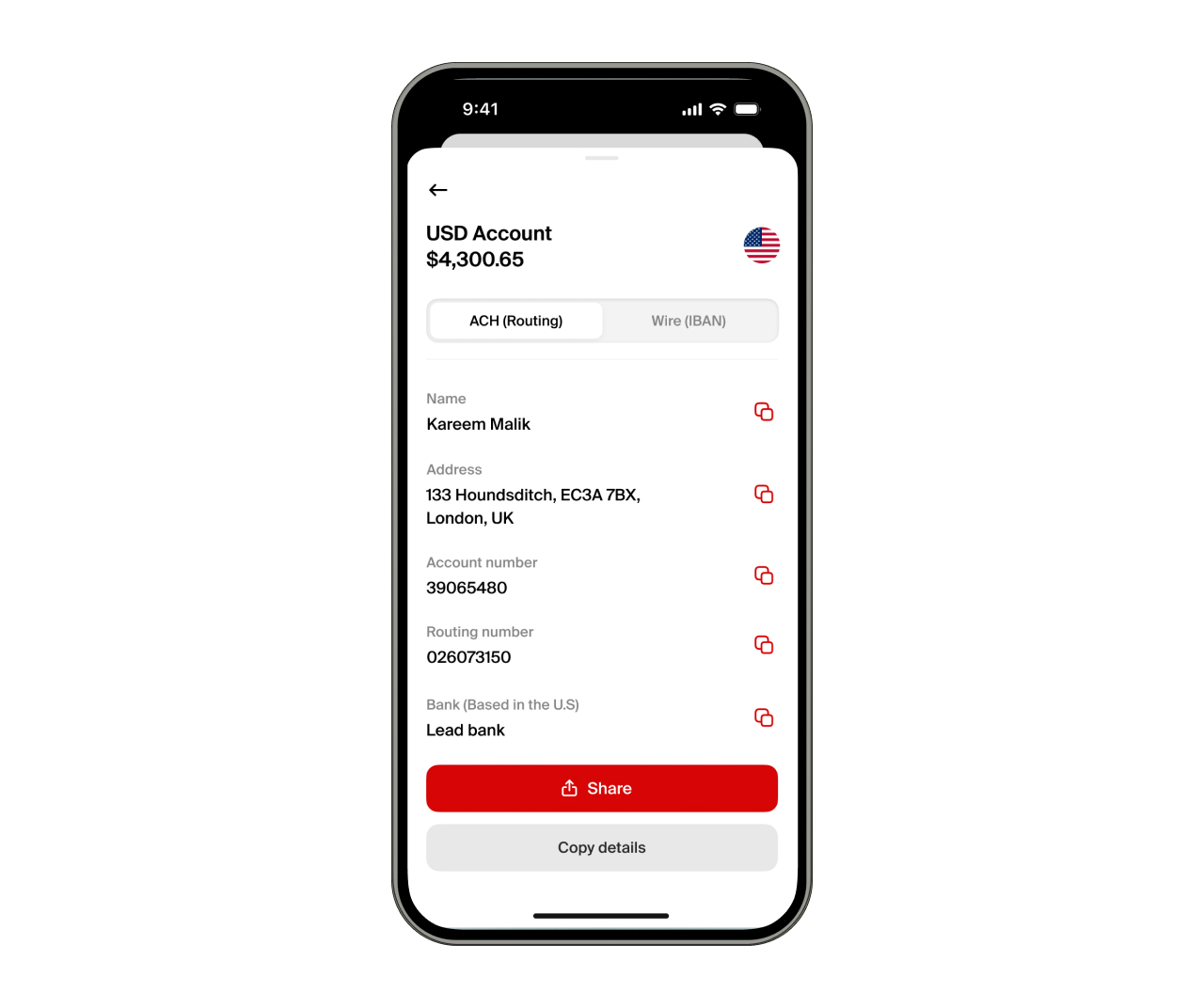
Accordingly, there are 5 common payout destinations Pakistani freelancers configure with nsave ACH details:
- Upwork: Settings → Get Paid → US Bank (ACH) → enter your nsave routing number and account number.
- Fiverr: Earnings → Withdraw → Bank Transfer → enter the same ACH details.
- Toptal, Freelancer.com, PeoplePerHour: Navigate to each platform's bank payout setup and enter the same ACH details.
- Direct clients: Add your nsave ACH routing number and account number to your standard invoice.
- SWIFT-paying clients from the UK, EU, or Australia: SWIFT is the international messaging network banks outside the US use to send cross-currency payments, so for these clients you should share your nsave SWIFT receiving details instead, available inside the app.
Step 3: Hold USD and Access Investment Options
As of June 2026, nsave provides the opportunity to earn 3.2% annual rewards on your USD balance on the Standard plan, paid daily. Alternatively, the nsave Pro plan raises that rate to 4.2% at $9.99 per month.
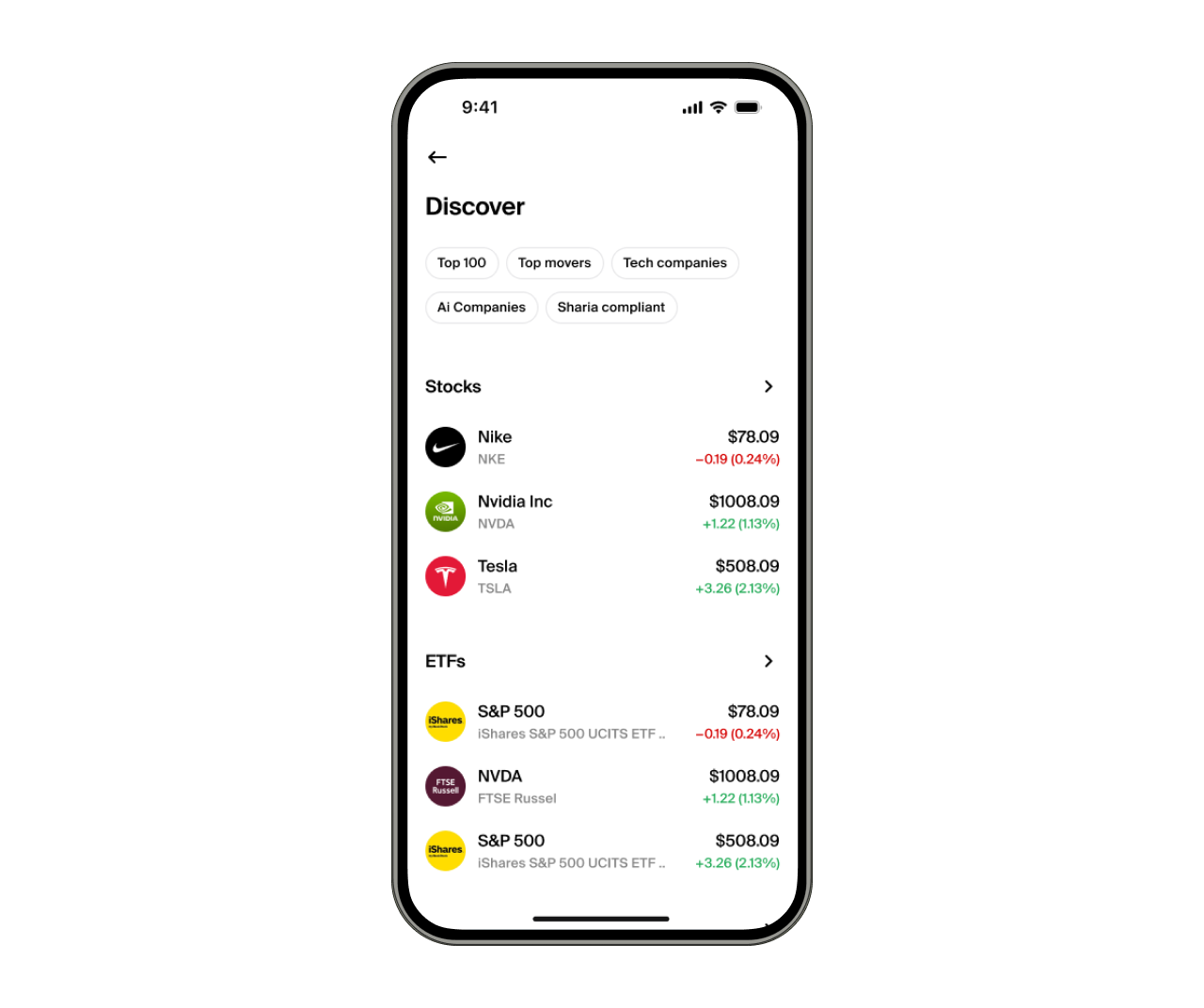
Your USD balance can also be held for weeks or months according to your own timeline. Additionally, nsave gives you access to invest in US stocks, ETFs, gold indices, or bonds from as little as $1 with no order fees, with Sharia-compliant options also available.
Investments involve risks, including the potential loss of capital. Past performance is not indicative of future results. Data provided is for illustrative purposes only. Consult a licensed financial adviser before making any investment decisions. Investment accounts are provided by a third-party broker dealer.
Step 4: Convert to PKR and Withdraw to Your Account
Finally, to withdraw from nsave, tap Withdraw in the app and send funds to any local Pakistani account for Free (for small transfers, a nominal fee may apply), with the exact PKR amount displayed before you confirm.

Congratulations, you should receive your funds usually within 5 minutes, but it may take up to 1 business day depending on the recipient's bank. In rare cases, it may take a little longer
How long do transfers take?
ACH transfers are typically received within 1-3 business days and are usually credited towards the end of the day. The only exception to that is when the ACH transfer is scheduled on a specific day.
SWIFT payments usually take longer and are more complex because they pass through multiple intermediary banks before reaching your account. This can take up to 2-10 working days.
nsave is not a bank. Funds are not FSCS-protected. Customer funds are held in regulated UK and EEA financial institutions, separated from company funds, and protected through safeguarding rules designed for electronic money services.
Building a Life on Dollar Income
For a growing number of Pakistanis, the gap between local salaries and local costs is no longer a wall but a reason to earn differently. A freelancer in Karachi billing US clients, a remote engineer employed by a European firm, or a returning professional planning a quieter life in Islamabad all share the same underlying advantage, which is income that holds its value while it waits.
The rupee will keep moving, inflation will keep testing budgets, and the cost of getting around will keep tracking the price of fuel. What changes the equation is your ability to receive dollars cleanly, hold them until conversion makes sense, and turn them into rupees on your own terms rather than the market's worst day.
For Pakistanis who earn in USD, nsave ultimately provides a non-resident USD account, PKR conversion on demand at a $1 minimum payout fee, and access to US market investments, helping USD earners get the most from their income before and after conversion (investment accounts are provided by a third-party broker dealer, and investments involve risk).
The information in this article is provided for general informational and educational purposes only and does not constitute financial, legal, or tax advice from nsave or any of its affiliates. It is not a substitute for advice from a qualified financial adviser. We make no representations or warranties, whether expressed or implied, that the content is accurate, complete, or up to date.
Fees, exchange rates, incentives, and product availability may change and can vary by user and jurisdiction. Examples are illustrative only. Before making any financial decisions, seek advice from a qualified financial adviser who can assess your individual circumstances and objectives.
nsave helps freelancers and professionals from Bangladesh, Nigeria, Pakistan, Egypt, and other emerging markets receive and manage USD abroad. As a non-bank payment provider, your money is not protected by the Financial Services Compensation Scheme (FSCS). Customer funds are held in regulated, UK and EEA financial institutions, separated from company funds, and protected through safeguarding rules designed for electronic money services.
