

Best Virtual Dollar Card for Freelancers and Remote Workers
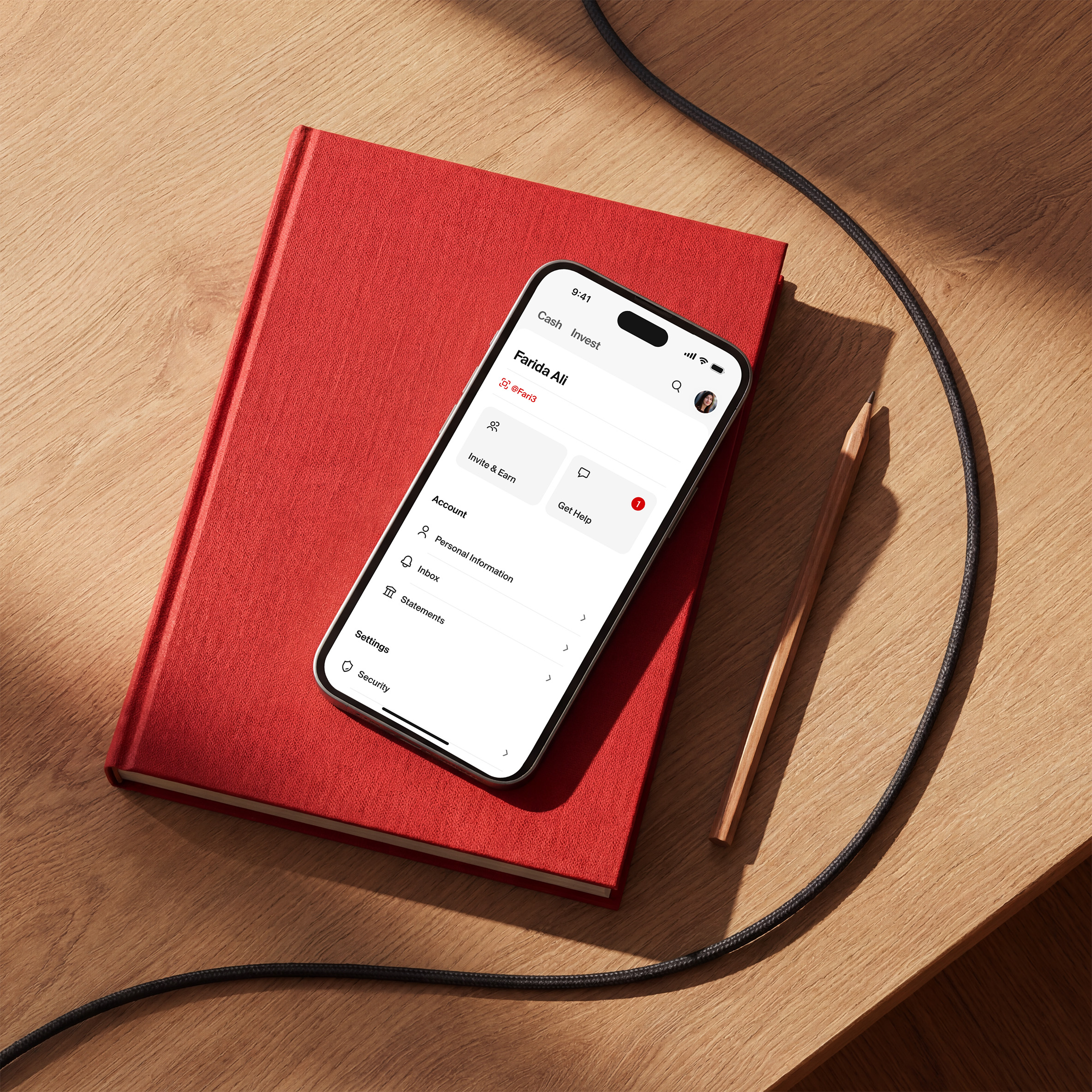
As of July 2026, the best virtual dollar card for freelancers and remote workers is the nsave virtual card, because it pairs a USD account with a card that works anywhere Visa is accepted across 170+ countries, including Bangladesh, Pakistan, Egypt, and Nigeria, opens with just your ID, and carries one clear fee.
According to Investopedia, a virtual card is a randomly generated card number linked to a funding account, used for online payments in place of a physical card. A virtual dollar card, therefore, is that same digital card denominated in US dollars, which lets you pay international merchants without touching your local currency first.
Top 6 Virtual Dollar Cards Compared
As of July 2026, the top 6 virtual dollar cards for freelancers and remote workers are nsave, Payoneer, Wise, Revolut, Grey, and WorldFirst, ranked on 4 weighted criteria, namely availability (40%), funding method (30%), FX fees (20%), and merchant acceptance (10%).
1. nsave
The best overall virtual dollar card for emerging-market freelancers is nsave, because the card and the USD account your earnings land in are the same product. Earnings from Upwork, Fiverr, Deel, Payoneer, or Wise arrive in the USD account, and the card spends from that balance directly, with no separate top-up channel sitting between receiving and spending.
Consequently, nsave removes the transfer fee and waiting day that a standalone card adds. The account opens with just your passport or national ID in under 10 minutes, and the card works anywhere Visa is accepted across 170+ countries, including Bangladesh, Pakistan, Egypt, and Nigeria.
Pros of the nsave virtual card:
- $0 monthly fee on the Essential plan, with the USD account and ACH receiving details included (ACH is the US Automated Clearing House network used for domestic USD transfers).
- USD card payments are free, so a USD-priced subscription such as Figma or Netflix carries no FX fee.
- One-time card fee of $1.99 on Essential, and $0 on Pro and Prestige.
- Apple Pay and Google Wallet support for in-app and contactless payments.
Cons of the nsave virtual card:
- A 1.5% FX fee applies when you pay in a currency other than USD.
- Sending over SWIFT, the international interbank wire network, costs $12.99 if you later wire funds out.
2. Payoneer
Payoneer's prepaid card is the best fit for sellers already receiving through its marketplace integrations with Amazon, Upwork, and Fiverr, because the card spends from the same Payoneer balance those platforms pay into.
In May 2025, international freelancers on Capterra user community forums praised the virtual card as "amazing for freelancers" precisely because it bypasses physical card shipping barriers in remote locations, and in October 2025, Wise Product Insights confirmed the card links smoothly to Apple Pay and Google Pay for immediate contactless spending.
Pros of the Payoneer card:
- Direct payout integration with major marketplaces, including Amazon, Upwork, and Fiverr.
- Instant virtual issuance, which sidesteps physical shipping delays entirely.
- Free transfers between Payoneer accounts.
Cons of the Payoneer card:
- In October 2025, the Payoneer Support Community changed the card prerequisites, so you must now receive at least $100 in payments within a rolling 6-month period before the Order Card feature unlocks.
- According to Payoneer's own 2026 pricing page on account and card fees, updated 1 January 2026, currency conversion carries a markup of up to 3.5%, the annual card fee is $29.95, and a $29.95 annual account fee applies when an account receives under $6,000 in any 12 consecutive months.
Community reporting adds a hidden cost to that list. In November 2025, members of the Payoneer community on Reddit noted that linking the virtual card to Apple Pay or Google Pay may trigger a 1.8% international transaction fee whenever the digital merchant's country differs from the card's issuing entity, typically First Century Bank in North America.
However, everything that makes Payoneer's card attractive, meaning instant issuance and wallet support, the nsave virtual card matches without the entry barriers, because there is no $100 unlock threshold, no annual card fee, and a flat, disclosed 1.5% on non-USD payments instead of a fee that surfaces only after checkout.
3. Wise
Wise fits freelancers based in its supported markets who hold and spend across several currencies, because conversions between held balances run at the mid-market rate, meaning the midpoint between buy and sell prices with no markup hidden in the rate.
However, that strength never reaches the readers this list serves, because according to a 2026 WorldFirst review on the Wise card, with fees checked in May 2026, the Wise card is not available in Pakistan or Bangladesh, and a 2026 Grey market guide on receiving USD in Nigeria confirms the card is likewise unavailable to Nigerian residents.
Pros of the Wise card:
- Mid-market exchange rate on conversions between held currencies, in markets where the card is issued.
- Multi-currency balance covering 40+ currencies in one account.
- Fee display before every transaction.
Cons of the Wise card:
- As of July 2026, there is no card issuance in Pakistan, Bangladesh, or Nigeria.
- In May 2025, digital nomad forums published warnings on Wise's strict compliance policies, because personal multi-currency accounts cannot accept commercial B2B funds directly without risking account suspension.
- SWIFT receiving fees apply when clients wire money into the account.
Community experience shows the card working well only inside that supported bubble. In February 2026, travellers on the Personal Finance NZ community on Reddit shared that contactless payments with the Wise virtual card run as standard across major US cities, although a backup physical card remains necessary at sit-down restaurants that take the card away to process payment.
Similarly, when business communities via P2PEmpire analysed Wise against Revolut in February 2026 and credited Wise for low-cost conversions, the entire comparison assumed you live where both products are issued.
However, the strength only reaches you if Wise will issue it, and for freelancers from Pakistan, Bangladesh, Egypt, and similar markets it has not (as of July 2026), whereas the nsave virtual card opens with just your ID, sits inside Apple Pay and Google Wallet, and accepts freelance platform earnings.
4. Revolut
Revolut is one of the strongest picks for freelancers based in the UK, EEA, US, and other supported developed markets, because its disposable virtual cards regenerate their details after each payment and give you a fraud-protection edge on one-off checkouts.
Meanwhile, the company keeps expanding, and in January 2026 Nik Storonsky, co-founder and CEO of Revolut, launched full banking operations in Mexico, extending virtual card access to another high-growth market. For freelancers from Pakistan, Egypt, or Nigeria, that announcement carries a sharper message, because the expansion map keeps skipping their countries.
Pros of the Revolut card:
- Disposable virtual cards for one-off payments, with details that refresh after each use.
- Multi-currency holding paired with in-app budgeting tools.
- Free standard plan with Apple Pay and Google Pay support.
Cons of the Revolut card:
- According to Revolut's 2026 Help Centre page on supported card countries, Revolut cards cannot be used in Pakistan, and per a 2026 Investing in the Web overview on Revolut availability, registration remains closed to residents of Pakistan, Egypt, and Turkey, with Nigeria and Bangladesh outside the supported list as well.
- Fair-usage limits apply to currency exchange on the free plan, per Revolut's plan terms.
In March 2026, European users on the Revolut community on Reddit detailed multi-card strategies, dedicating one virtual card solely to Google Pay and assigning a second card with strict spending caps to recurring SaaS subscriptions, which cleanly segregates monthly expenses.
Likewise, you can replicate that exact discipline on nsave, because the virtual card freezes and unfreezes in-app at any time, and unlike Revolut, the account is open to the selected countries.
5. Grey
Grey is one of the strongest Africa-focused options, with its deepest traction among Nigerian freelancers, because the card spends directly from the account balance rather than a separately loaded wallet.
In January 2026, Idorenyin Obong, CEO of Grey, announced an infrastructure upgrade letting African and international freelancers spend USD balances at local terminals through Apple Pay and Google Pay. Subsequently, in February 2026, Grey's business banking arm added native USDC stablecoin support, so users settle balances and fund the card over stablecoin rails.
Pros of the Grey virtual card:
- Card spends straight from the USD, EUR, or GBP balance, with no top-up step, per Grey's own 2026 cards page.
- Apple Pay and Google Pay tokenisation in supported regions since January 2026.
- No monthly maintenance after the one-time creation fee, which Grey's own blog listed at $4 in July 2025 and its cards page lists at $5 as of 2026.
Cons of the Grey virtual card:
- Coverage is Africa-weighted rather than global, with availability concentrated in markets such as Nigeria, Kenya, Ghana, Morocco, and Egypt.
- A 2% plus $0.50 card network fee applies when the merchant charges in a currency different from the card, per Grey's March 2026 fee update.
In December 2025, emerging-market remote workers on Grey's community channels reported that the instant USD virtual card may only go live after Tier-2 KYC verification, meaning a government ID upload, so you should complete that step before you need the card, not on the day a payment is due.
Similarly, a stablecoin deposit route exists on nsave, so funding via USDT never requires leaving the account your card spends from, and the nsave virtual card carries that same no-top-up design beyond Africa to 170+ countries wherever Visa is accepted.
6. WorldCard by WorldFirst
WorldFirst, a business-focused international payments provider, is considered one of the best fits for registered online sellers and small agencies, because its World Card generates up to 20 multi-currency virtual cards per account without incurring credit line interest, per its own 2026 launch announcement for Pakistan, published June 2026.
Pros of WorldCard:
- Free Mastercard-powered multi-currency business payment cards, per WorldFirst's 2026 product comparisons.
- Local currency accounts in 15+ currencies with zero setup and zero monthly fees.
- Free receiving on business collections, including payouts from marketplaces such as Amazon and eBay.
Cons of WorldCard:
- The account is built for business entities, so as an individual freelancer you must register as a sole trader before you qualify.
- Currency exchange spreads apply on conversion between balances, and no flat published FX percentage exists to compare against card rivals.
- The orientation is marketplace sellers rather than freelance platforms, meaning Upwork-style payout rails are not the product's centre.
Community threads confirm both the appeal and the workaround. In April 2026, sole traders on the beermoneyuk community on Reddit confirmed that WorldFirst operates as a multi-currency business alternative to Wise and Revolut, rewarding promotional signups tied to virtual card spending or marketplace payout volume.
Follow-up discussions in July 2026 noted that anyone filing as a sole trader under their own name qualifies, with card spending targets recommended as the cost-effective route to bonuses without losing money to exchange spreads.
Meanwhile, the nsave virtual card is available to you as an individual with just your ID, and if you do run a registered business, a separate nsave business account covers paying international employees in USD.
Best Virtual Dollar Cards in Pakistan
The best virtual dollar card for freelancers from Pakistan is the nsave virtual card, which pairs a USD account with a card accepted anywhere Visa runs across 170+ countries and opens with just your ID.
Beyond it, Pakistani options split between fintech wallets and specialist cards, so here are the top local names that come up most often:
- Halocard: A foreign-issued virtual card that a 2026 Halocard guide on virtual credit cards in Pakistan, published March 2026, positions for US-merchant acceptance, best for reliable US checkouts, although local funding runs through top-up channels that add their own margin, which is why Halocard's own guide points everyday users to NayaPay and SadaPay for domestic use.
- SadaPay: A Mastercard-powered wallet card that, per a 2026 WorldFirst note on virtual cards for e-commerce sellers in Pakistan, refocused entirely on individual users in June 2026, best for USD conversion on freelance earnings through SadaBiz, although a 1.5% currency conversion fee applies on international card spending and 2026 reviewers note reliability wobbles during technical outages.
- NayaPay: A wallet-linked Visa card, best for steady local e-commerce and bill payments, although users report blocks on international recurring payments and the first physical card is no longer free as of 2026.
- Faysal Digibank: A bank app issuing a virtual card tied to a local account, best for secure Islamic bank integration, although users report a slow app interface.
Best Virtual Dollar Cards in Egypt
For freelancers from Egypt, the best virtual dollar card is the nsave virtual card, because earnings land in a USD account and the card spends that balance anywhere Visa is accepted across 170+ countries.
Egyptian users otherwise lean on foreign-issued dollar cards, and according to a 2026 Halocard guide on virtual credit cards in Egypt, published February 2026, strict foreign exchange caps and central bank payment blocks are the primary drivers of that demand. The 4 local options that come up most often are:
- Grey: According to a 2026 Grey article on virtual cards in Egypt, published January 2026, a multi-currency USD, EUR, and GBP card with Apple Pay and Google Pay tokenisation, best for wallet-led spending with no monthly maintenance, although Grey's own March 2026 fee update lists a 2% plus $0.50 card network charge whenever a merchant bills outside the card currency.
- Card-Y: A licensed card linked to global accounts, best for bypassing local payment blocks, although a March 2026 terms update set a $20 annual issuance fee with a 1.5% conversion markup, and Egyptian freelancer reviews report failed checkouts on the Microsoft Store and no Apple Pay support.
- Yalla (by PaySky): A local super-app card with virtual and physical prepaid access, best for domestic spending inside Egypt's Meeza rails, Meeza being the national payment scheme, although users find it weaker on international merchants and ad platforms.
- EverTry: A virtual USD card funded instantly with EGP or USDT, best for AWS, Netflix, and ad platform payments, although stablecoin funding carries its own conversion cost on every top-up.
Community discussion sharpens the trade-offs. Discussions within Egyptian freelancing communities through 2025 weigh Card-Y's per-transaction fee of 1% (minimum $1, maximum $5) against the convenience of topping up over InstaPay, Egypt's instant interbank transfer network, and several users state they prefer a licensed local issuer precisely because stablecoin-funded alternatives remain legally unsettled in Egypt.
That preference for regulated rails over headline pricing shapes the whole Egyptian market.
Best Virtual Dollar Cards in Bangladesh
The best virtual dollar card for freelancers from Bangladesh is the nsave virtual card, opened with just your ID and accepted across 170+ countries wherever Visa runs. The local options below serve different needs, so here are the 5 names people actually use:
- Priyo: Per its 2026 Priyo page on its Mastercard programme, it issues a first virtual card free after verification with dual USD checking accounts, best for starting at zero card cost, although Priyo's own fee schedule, updated July 2026, adds a $10 semi-annual maintenance fee (waived at $5,000 in yearly deposits) plus $0.50 monthly per extra virtual card, and 2026 Trustpilot reviewers flag those layered charges.
- bKash Virtual Card (USD): A card funded straight from the balance of bKash, Bangladesh's largest mobile money wallet, best for smaller one-off payments, although its balance-tied limits make it unsuited to larger recurring bills.
- EBL SKYBANKING prepaid: Per a 2026 EBL page on its virtual prepaid card, digital-only onboarding runs through the app, best for issuance without a branch visit, although specialist variants such as the Visa Daraz and Mastercard Aqua carry BDT 200 plus VAT at issuance.
- BRAC Bank multi-currency: A bank-issued dual-currency card, best for existing BRAC customers with travel documents in order, although it requires a BRAC account plus passport endorsement paperwork before international use.
- Halocard: A foreign-issued card, best for reliable US-merchant acceptance, although funding it from Bangladesh adds a cost layer on every top-up.
Reliability remains the recurring warning, as a 2026 Buvei brief on virtual cards for Bangladesh users, published January 2026, reports that strict foreign currency controls and platform-level risk checks keep local merchant checkouts unpredictable.
Community experience puts the barrier earlier still. Discussions within Bangladeshi communities in Dhaka as early as July 2025 show users without a passport locked out of dual-currency cards entirely, some turning to informal Discord intermediaries, and follow-up threads in the same Dhaka community in December 2025 show passport holders still blocked by bank age and account-type restrictions on endorsement.
Those two barriers, documentation and endorsement, define who the local card market actually serves.
Best Virtual Dollar Cards in Nigeria (Africa)
For freelancers from Nigeria and Africa, the nsave virtual card is one of the best virtual dollar cards, working anywhere Visa is accepted across 170+ countries with one clear fee. Nigerian users also hold the widest local menu of the four markets, and these 4 cover most use cases:
- Grey (formerly Aboki Africa): A virtual USD card that, as of July 2026, spends directly from the USD balance with no top-up step, best for freelancers receiving foreign payments, although Grey's own fee pages concede its conversion spread is not the lowest on every currency pair, so the Naira withdrawal rate varies.
- Chipper Cash: A wallet with a 3D-secured virtual dollar card, best for quick card creation inside an existing Chipper wallet, although Chipper's own help centre lists a $1 monthly maintenance fee, a $0.90 flat fee on every successful USD transaction, and a NGN 250 decline fee, and users report the Naira funding rate sits well above the withdrawal rate.
- Raenest (formerly Geegpay): A freelancer-focused USD, GBP, and EUR card and account, best for multi-currency earners on Upwork-style payouts, although 2025 and 2026 Trustpilot reviewers describe slow support responses, rigid KYC checks, and deposits taking up to 2 days to reflect.
- Cardtonic: Per a 2026 Cardtonic page on getting a virtual dollar card, updated June 2026, it funds the card by instant bank transfer from any local bank, best for frictionless Naira funding at a $1.50 creation fee with no maintenance charges, although it stays single-currency.
The appeal is practical, because per a 2026 Nosh guide on virtual dollar cards in Nigeria, published January 2026, these cards remove physical theft risk and convert Naira to USD at checkout.
Community threads sharpen the verification picture. Discussions within Nigerian online communities through 2025 show that every local card route requires a Nigerian phone number plus BVN and NIN, the country's Bank Verification Number and National Identification Number, completed in person, and earlier discussions in the same Nigerian community in late 2024 flag Naira-denominated cards clearing inconsistently on Apple and Google storefronts.
How to Choose a Virtual Dollar Card
To choose a virtual dollar card, you should check 4 things in order: availability in your country, how you fund the card, the FX fee on non-USD payments, and merchant acceptance. The order matters because each check filters the list before the next one applies.
Ultimately, for freelancers in Bangladesh, Pakistan, Egypt, Nigeria, and similar markets, the card that clears all 4 checks in one place is the one attached to a USD account you open locally with just your ID, which is the setup nsave provides.
How to Get the nsave Virtual Card
To get the nsave virtual card, you should download the nsave app, verify your identity with your passport or national ID, open your USD account, and create the virtual card from the Cards tab. The full sequence takes under 10 minutes:
- Download the nsave app from the App Store or Google Play.
- Verify your identity with your passport or national ID.
- Open your USD account, which arrives with ACH receiving details included.
- Create the virtual card from the Cards tab, paying the one-time $1.99 fee on Essential ($0 on Pro and Prestige).
- Add the card to Apple Pay or Google Wallet for in-app and contactless payments.
Your card details sit in the app from the moment of creation, and you can freeze or unfreeze the card in-app at any time, which contains the damage if a merchant leaks card data.
Payments in USD carry no FX fee, and a 1.5% FX fee applies on other currencies, so the card runs at its lowest cost when your subscriptions are priced in dollars.
One thing you should hold clearly: nsave is not a bank, and funds are not FSCS-protected, with customer funds instead safeguarded in regulated UK and EEA financial institutions under electronic money rules.
A virtual dollar card used to be a privilege of geography, available to freelancers in London and locked away from equally skilled people in Dhaka, Karachi, Cairo, and Lagos. That gap is closing.
A freelancer in any of those cities now opens a USD account with an ID, receives client payments into it, and spends from the same balance on the tools that run their work, all inside a single afternoon. The infrastructure finally matches the way this generation of remote workers actually earns, and the distance between talent and access keeps shrinking.
Disclaimer
The information in this article is provided for general informational and educational purposes only and does not constitute financial, legal, or tax advice from nsave or any of its affiliates. It is not a substitute for advice from a qualified financial adviser. We make no representations or warranties, whether expressed or implied, that the content is accurate, complete, or up to date.
Fees, exchange rates, incentives, and product availability may change and can vary by user and jurisdiction. Examples are illustrative only. Before making any financial decisions, seek advice from a qualified financial adviser who can assess your individual circumstances and objectives.
nsave helps freelancers and professionals from Bangladesh, Nigeria, Pakistan, Egypt, and other emerging markets receive and manage USD abroad. As a non-bank payment provider, your money is not protected by the Financial Services Compensation Scheme (FSCS). Customer funds are held in regulated, UK and EEA financial institutions, separated from company funds, and protected through safeguarding rules designed for electronic money services.
